Table of Contents
If you finish a workout and find your face beet red, especially next to a running partner whose cheeks barely changed color, it can feel a little awkward.
A flushed face looks dramatic, but it is usually just a side effect of a good run. So why does it happen, and can you tone it down? Let's take a look.
What makes your face turn red when you run?
The red comes from a process called vasodilation, which means your blood vessels widen.
As you run, your muscles produce heat and your core temperature climbs. To shed that heat, your body opens up the small blood vessels near your skin and pushes warm blood toward the surface, where it can cool.
Sweating handles part of the cooling, while this rush of blood to the skin handles the rest, and together they keep your core temperature from climbing too high. Your face flushes first because it is packed with these tiny vessels, and they lie close to the skin.
How red you look, though, depends partly on your skin:
- On fair skin, the blood underneath shows through easily, so the flush is obvious.
- On darker skin, by contrast, the same rush of blood happens, but more melanin hides it, so the redness is harder to see.
Either way, the cooling itself is identical.
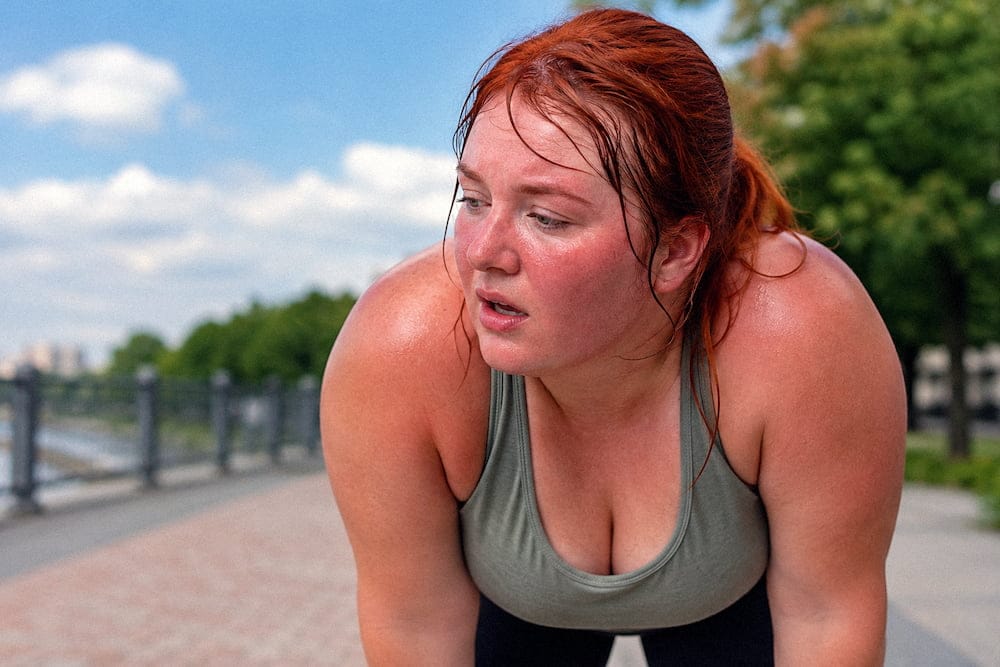
Importantly, a bright red face is not a sign that you are out of shape. If anything, fit runners often flush hard, because their bodies are quick to start cooling. What improves with fitness is how fast your face fades back to normal after you stop. The flush itself can stay just as bright.
Is a red face during exercise dangerous?
Almost always, no. A flushed face on its own is a healthy sign that your body is managing its temperature. So you can keep running as long as you feel good and have no other symptoms.
Redness turns into a concern only when other symptoms come with it. A red face paired with dizziness, nausea, confusion, a pounding headache, or skin that suddenly stops sweating can point to heat exhaustion or heat stroke, which need fast cooling and, in the worse cases, medical help.
Heat stroke is the serious end of this, when the body loses its ability to cool and the skin can turn hot and dry, and it counts as a medical emergency.
If those signs appear, stop, get to shade or indoors, loosen tight clothing, and cool down with water.
Separately, redness with chest pain, a racing heart, or unusual shortness of breath is worth a call to your doctor, especially if you are over 40 or have high blood pressure.
If your face stays red for more than an hour or two after you cool down, or the redness burns and brings visible broken vessels, a skin condition like rosacea may be behind it, and a dermatologist can help.
Related: 10 Ways to Avoid Runner’s Face
Why do some people get redder than others?
Two runners can finish the same run looking completely different, and a few things explain the gap:
- Genetics, since some people have more blood vessels near the skin, or more sensitive ones
- Fair or thin skin, which lets the blood show through more clearly
- Less fat in the cheeks, which leaves the vessels closer to the surface
- Rosacea, a common skin condition that makes facial vessels flush easily
- Heat and humidity, which force your body to work harder to cool down
- Dehydration, which makes cooling less efficient and can deepen the flush
- Hard efforts, since higher intensity produces more heat
- Tight or heavy clothing, which traps heat against your body
- Alcohol or spicy food beforehand, which widen your blood vessels on their own
- Some medications that affect blood flow
7 ways to reduce facial redness from running
You cannot switch off vasodilation, and you would not want to, since it keeps you cool. Even so, you can reduce how red and how hot you get:
- Run when it's cooler. Head out early morning or evening, stick to shade, or use an air-conditioned treadmill. Your body flushes less when the air around you is already cool.
- Hydrate before and during. Good hydration helps you sweat efficiently, which does more of the cooling and eases the load on your skin. Drink water in the hours before a run and sip on longer efforts.
- Warm up and build effort gradually. Easing into a run lets your cooling system keep pace, so your temperature climbs steadily and does not spike.
- Wear loose, breathable clothing. Tight or heavy fabrics trap heat against you, while light, airy layers let heat and sweat escape.
- Cool your skin down. A cold, damp towel on your face or a splash of cool water brings the heat down faster once you finish. If your skin is sensitive, keep the water cool instead of icy, since a hard cold shock can make flushing worse.
- Protect your skin from the sun. Use a sunscreen, since sun damage weakens facial vessels over time and can deepen redness in the long run.
- Calm or cover it afterward. Once you have washed with cool water, a soothing product with niacinamide can settle the skin, and a green-tinted color corrector (СС cream) will mask the redness if you want it gone for a while. Skip retinols and acids on freshly flushed skin, since they tend to irritate it further.
And if you suspect rosacea, a dermatologist can help you calm the triggers.
Frequently asked questions
Is a red face after exercise good or bad?
Usually good. It shows your body is cooling itself well. It only becomes a concern when it comes with dizziness, chest pain, nausea, or skin that stops sweating.
How long should a red face last after running?
For most people it fades within about 20 to 60 minutes of cooling down. Redness that lingers for hours, or comes with burning and visible vessels, may point to rosacea and is worth checking.
Does a red face mean I'm unfit?
No. Fit runners often flush hard because their bodies cool quickly. Fitness changes how fast your face returns to normal afterward. It does not change how red you get during the run.
Why is my face still red hours after a workout?
Prolonged redness can come from rosacea, sensitive blood vessels, or sun-damaged skin. If it happens often or feels like burning, a dermatologist can help you find the cause.
Can I stop my face from going red when I run?
Not completely, and you should not try to, since the flush keeps you cool. You can reduce it by running in cooler conditions, staying hydrated, and wearing breathable clothing.