

Table of Contents
This guide breaks down the top running shoes by real training needs—from daily miles and treadmill runs to marathon training, speed workouts, race day, and trails.
Editor’s note
Choosing running shoes is highly personal. A shoe that feels perfect for one runner may feel unstable, narrow, too soft, or too firm for another.
This guide is based on editorial research, expert reviews, product specifications, runner feedback, and the needs of different types of runners. We have not personally tested every model listed here.
Where possible, we prioritized shoes with consistent feedback across multiple sources, clear use cases, broad size availability, and good value for their category. We also considered trade-offs, because no running shoe is ideal for every runner.
How we chose these running shoes
We organized this guide around real running needs: daily training, beginner running, marathon training, speed workouts, race day, treadmill running, trails, cushioning, support, wide feet, and flat feet.
For each category, we compared shoes using several editorial factors: official specs, expert review consensus, available lab-style measurements, recurring feedback from runners, price, size and width availability, and how clearly the shoe fits its intended use.
No shoe was chosen simply because it was new, viral, heavily promoted, or used by elite runners. The goal was to recommend the shoe that made the most sense for each type of runner and training need.
Best overall running shoe: ASICS Novablast 5
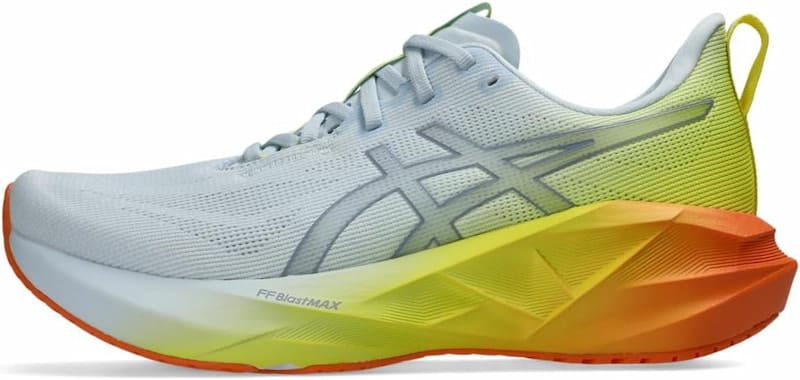
The ASICS Novablast 5 is our top pick for 2026 because it brings together the qualities most runners want in one shoe: soft landings, a lively ride, enough stability for regular mileage, and the versatility to handle easy, long, and occasional faster miles.
Rather than feeling like a stripped-down speed shoe or a traditional firm workhorse, it sits in the modern daily trainer category: cushioned, energetic, relatively light, and comfortable enough for frequent use. That makes it a strong choice for runners who want one reliable shoe for most of their weekly miles.
The trade-off is that runners who prefer a firmer, lower-profile, more traditional ride may feel more at home in shoes like the Brooks Ghost 17, Nike Pegasus 41, or Saucony Ride 18.
Best use:
Daily training, easy runs, long runs, moderate-paced runs, and runners who want one versatile road shoe.
Key specs:
| Weight | 9 oz / 255 g men’s; 7.9 oz / 225 g women’s |
|---|---|
| Heel-to-toe drop | 8 mm |
| Stack height | 41.5 mm heel / 33.5 mm forefoot men’s; 40.5 mm heel / 32.5 mm forefoot women’s |
| Support | Neutral |
| Cushioning | High |
| Surface | Road |
Pros:
- Soft, energetic cushioning
- Versatile enough for most weekly mileage
- Lighter than many max-cushioned trainers
- Comfortable for easy and long runs
Cons:
- May feel too soft or bouncy for runners who prefer a firmer ride
- High stack may not suit runners who like a lower-profile shoe
- Not ideal as a dedicated speed workout or race-day shoe
Best running shoe for beginners: Brooks Ghost 17
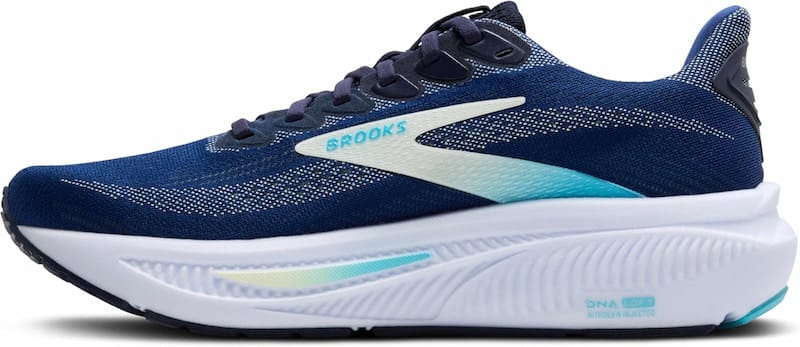
Your first running shoe does not need to be the lightest, fastest, softest, or most technical option on the wall. It should feel comfortable and be stable enough for regular easy runs with walk breaks and gradually increasing mileage.
For new runners, the Brooks Ghost 17 fits that brief. It gives you a comfortable, predictable ride for building your first miles, while its neutral platform works well for many runners who are still figuring out what they like in a running shoe.
Still, runners who want a softer, bouncier feel may prefer the ASICS Gel-Cumulus 27 or ASICS Novablast 5.
Best use:
Beginner training, run-walk intervals, first 5K plans, treadmill runs, and easy road miles.
Key specs:
| Weight | 10.1 oz / 286 g men’s; 9 oz / 255 g women’s |
|---|---|
| Heel-to-toe drop | 10 mm |
| Stack height | 36.5 mm heel / 26.5 mm forefoot |
| Support | Neutral |
| Cushioning | Medium-high |
| Surface | Road |
Pros:
- Comfortable and beginner-friendly ride
- Versatile enough for run-walk plans and first 5K training
- Available in multiple widths in many markets
Cons:
- May feel less lively than softer, bouncier daily trainers
- Not ideal for speed workouts or race day
- Higher drop may not suit every runner’s preference
Best cushioned running shoe: HOKA Bondi 9
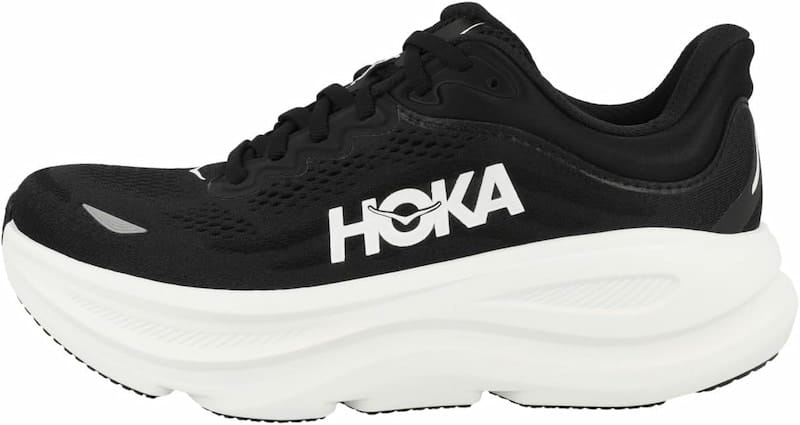
The HOKA Bondi 9 is the cushioned pick for runners who want maximum protection underfoot. It has a tall stack, a broad platform, and a rocker-shaped sole that helps the shoe roll more smoothly than its size might suggest.
This version also feels more modern than earlier Bondi models, thanks to updated supercritical foam and extra stack height. The Bondi 9 is the pick if you want the most protective, max-cushion feel.
Runners who prefer a more traditional premium trainer, with plush cushioning and a higher-drop ride, may like the ASICS Gel-Nimbus 27. Those who want a cushioned shoe that feels less bulky for daily miles may prefer the New Balance Fresh Foam X 1080 v14.
Best use:
Easy runs, recovery runs, long runs, walking, and high-comfort daily mileage.
Key specs:
| Weight | 10.5 oz / 297 g men’s; 9.3 oz / 263 g women’s |
|---|---|
| Heel-to-toe drop | 5 mm |
| Stack height | 43 mm heel / 38 mm forefoot men’s; 42 mm heel / 37 mm forefoot women’s |
| Support | Neutral |
| Cushioning | Maximum / plush |
| Surface | Road |
Pros:
- Maximum cushioning for easy and recovery miles
- Broad, stable-feeling platform for a neutral shoe
- Rocker geometry helps the shoe roll smoothly from landing to push-off
- More modern midsole feel than previous Bondi versions
- Also works well for walking and long hours on your feet
Cons:
- Too bulky for speed workouts or race day
- May feel too much shoe for runners who prefer a lighter, more flexible trainer
- Lower 5 mm drop may not suit runners used to higher-drop shoes
- Fit can feel snug for some runners, especially in the forefoot
Best lightweight running shoe: HOKA Mach 6
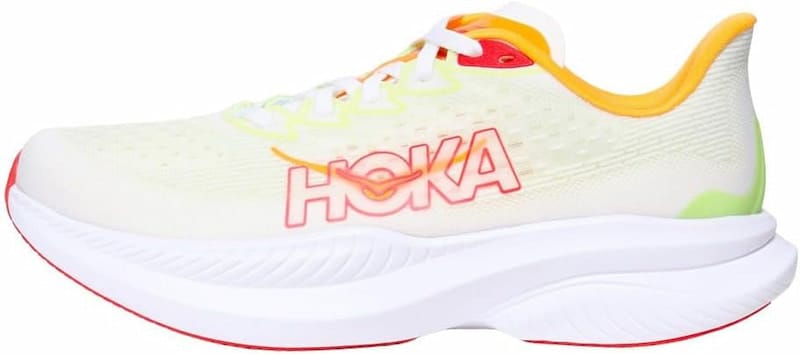
The HOKA Mach 6 is our lightweight pick because it feels quick and streamlined without becoming too stripped down for everyday training. It has enough cushioning for daily miles, but the ride feels firmer and snappier than max-cushioned shoes like the HOKA Bondi 9 or ASICS Gel-Nimbus 27.
That balance makes it useful for runners who want one lighter shoe for days when a standard trainer feels too bulky. It can handle tempo efforts and shorter speed workouts, while still offering more protection than a true racing flat or minimalist shoe.
The New Balance FuelCell Rebel v4 is an alternative if you want a softer, more flexible lightweight trainer. The adidas Adizero SL2 is worth considering if you want a slightly lower-priced lightweight trainer with good pace range.
Best use:
Faster daily runs, tempo runs, short intervals, and runners who want a lighter trainer for regular mileage.
Key specs:
| Weight | 8.2 oz / 232 g men’s; 6.7 oz / 189 g women’s |
|---|---|
| Heel-to-toe drop | 5 mm |
| Stack height | 37 mm heel / 32 mm forefoot men’s; 35 mm heel / 30 mm forefoot women’s |
| Support | Neutral |
| Cushioning | Moderate / responsive |
| Surface | Road |
Pros:
- Light feel for faster runs
- More cushioned than a minimal speed shoe
- Responsive ride without a plate
- Good option for runners who find max-cushioned shoes too bulky
Cons:
- May feel too firm for runners who want plush cushioning
- Lower 5 mm drop may not suit runners used to higher-drop shoes
- Not ideal for runners who need structured stability
Best stability running shoe: ASICS Gel-Kayano 32
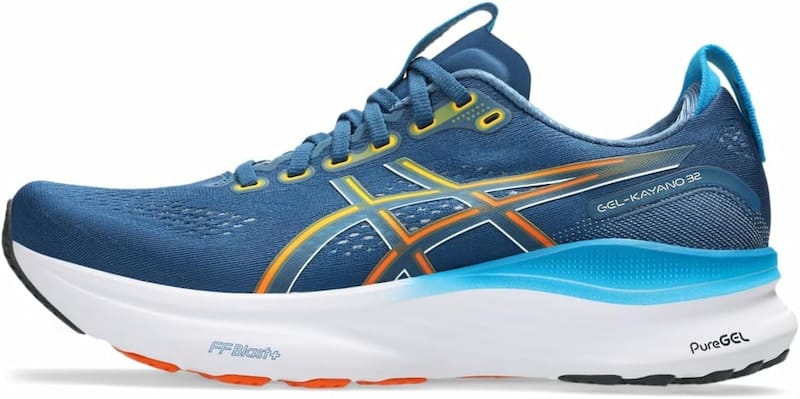
The ASICS Gel-Kayano 32 delivers support without the harsh, old-school corrective feel that used to define many stability shoes. Its guidance-based design helps create a more centered ride, while the high cushioning gives it enough protection for daily training and longer runs.
That makes it especially useful for runners who know they prefer a structured shoe but still want softness and a smooth ride underfoot. The Kayano 32 feels more premium and protective than lighter support shoes, which is why we chose it as our stability pick in a broad 2026 running shoe guide.
If you want a slightly lower-priced, classic support shoe with broad width availability, the Brooks Adrenaline GTS 25 is a great alternative. If you prefer a lighter stability trainer, the ASICS GT-2000 13 may be a better fit.
Best use:
Daily training, long runs, easy runs, and runners who want a supportive shoe with high cushioning.
Key specs:
| Weight | 10.6 oz / 300 g men’s; 9.2 oz / 260 g women’s |
|---|---|
| Heel-to-toe drop | 8 mm |
| Stack height | 40 mm heel / 32 mm forefoot men’s; 39 mm heel / 31 mm forefoot women’s |
| Support | Stability / neutral-stability |
| Cushioning | High |
| Surface | Road |
Pros:
- Supportive without feeling overly corrective
- High cushioning for daily training and long runs
- Smooth ride for a stability shoe
- More premium feel than many traditional support trainers
- Good option for runners who want structure and comfort together
Cons:
- Pricier than many everyday stability trainers
- May feel like too much shoe for runners who prefer a lower-profile trainer
- Not ideal for fast workouts or race day
Best running shoe for wide feet: Brooks Ghost Max 3
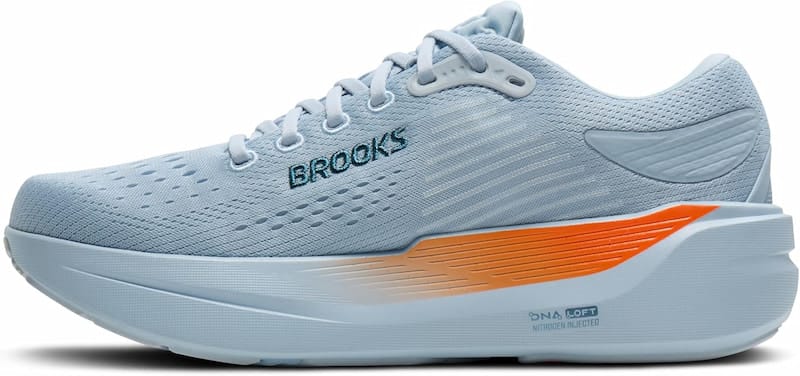
We chose the Brooks Ghost Max 3 as our wide-feet pick because it gives runners more than just extra room. With a broad, stable-feeling platform, protective cushioning, and wide-width availability, it is a solid option for runners who often feel cramped or unstable in narrower daily trainers.
That combination matters because wide feet are not only a fit issue. A shoe can have enough space in the upper but still feel narrow or insecure underfoot. The Ghost Max 3 solves that better than many standard trainers by pairing a roomier fit with a wide base and a smooth, easygoing ride.
Runners who want a more natural toe-box shape may prefer the Topo Atmos or Altra Torin 8. If you want a softer premium trainer with wide and extra-wide options, the New Balance Fresh Foam X 1080 v14 is also worth considering.
Best use:
Easy runs, long runs, daily mileage, walking, and if you need more room or use orthotics.
Key specs:
| Weight | 11.2 oz / 317.5 g men’s; 10 oz / 283.5 g women’s |
|---|---|
| Heel-to-toe drop | 6 mm |
| Stack height | 39 mm heel / 33 mm forefoot |
| Support | Neutral |
| Cushioning | High / protective |
| Surface | Road |
Pros:
- Available in wide and extra-wide widths in the US
- Broad, stable-feeling platform for a neutral shoe
- Protective cushioning for easy runs and long days on your feet
- Works well for walking and running
- Orthotic-friendly design
Cons:
- Heavier than many daily trainers
- Too bulky for speed workouts or race day
- May feel too structured for runners who prefer a flexible, natural ride
- Wide and extra-wide availability can vary by market, color, and size
Best running shoe for flat feet: Brooks Adrenaline GTS 25
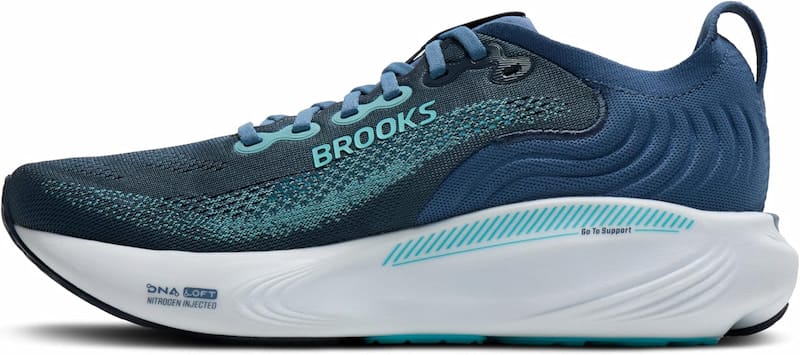
Flat feet do not automatically mean you need a stability shoe, but some runners with low arches feel better with more structure underfoot. The Brooks Adrenaline GTS 25 is our pick here because it offers a supportive, predictable ride without feeling overly corrective.
That makes it a useful starting point if your neutral shoes feel unstable or unsupportive. Its GuideRails system is designed to help limit excess movement, while the comfortable cushioning and familiar fit work well for easy runs, daily mileage, walking, and run-walk training.
Runners who want a lighter support shoe may prefer the ASICS GT-2000 13. If you want a more cushioned premium stability shoe, the ASICS Gel-Kayano 32 is the better option.
Best use:
Easy runs, daily training, walking, run-walk plans, and runners with low arches who prefer extra guidance.
Key specs:
| Weight | 10.6 oz / 300.5 g men’s; 9.5 oz / 269 g women’s |
|---|---|
| Heel-to-toe drop | 10 mm |
| Stack height | 37 mm heel / 27 mm forefoot |
| Support | Stability / structured support |
| Cushioning | Balanced |
| Surface | Road |
Pros:
- Supportive without feeling stiff
- Predictable ride for easy runs and daily mileage
- Available in multiple widths
Cons:
- Not as light as many neutral daily trainers
- Not very responsive for faster workouts
- Higher-drop design may not suit runners who prefer a lower-drop shoe
Best running shoe for marathon training: ASICS Superblast 2
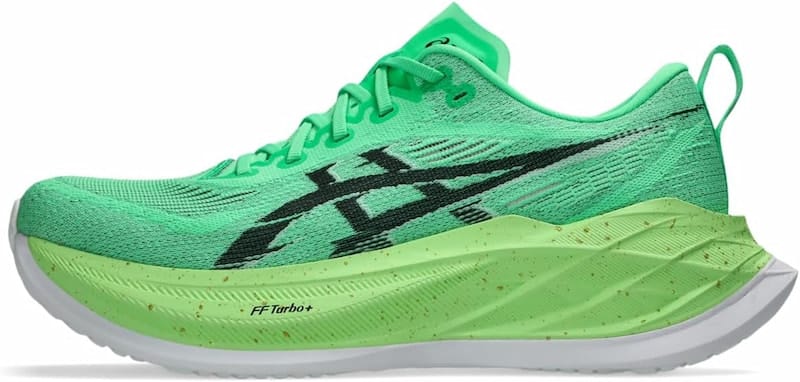
Marathon training asks a lot from one shoe: long-run protection, enough responsiveness for marathon-pace work, and the durability to handle weeks of high mileage. The ASICS Superblast 2 fits that role better than most because it feels highly cushioned and efficient without turning into a pure race-day shoe.
It has a tall, cushioned platform, a lively midsole, and a surprisingly light feel for the amount of foam underfoot. That combination makes it especially useful during marathon prep, when one week can include easy miles, long runs, and marathon-pace segments.
The Superblast 2 can handle those demands better than most standard daily trainers, while still feeling more training-friendly than an aggressive carbon-plated racer.
If you want a faster workout-focused shoe, the Saucony Endorphin Speed 5 is a reliable alternative. If you mainly want maximum comfort for long, slower runs, the Brooks Glycerin Max may be more appealing.
Best use:
Long runs, marathon-pace workouts, progression runs, and high-mileage training blocks.
Key specs:
| Weight | 8.8 oz / 250 g (unisex) |
|---|---|
| Heel-to-toe drop | 8 mm |
| Stack height | 45 mm heel / 37 mm forefoot |
| Support | Neutral |
| Cushioning | Maximum / responsive |
| Surface | Road |
Pros:
- Highly cushioned but still light
- Responsive enough for marathon-pace work
- Versatile
- No carbon plate, so it feels more training-friendly than many race-day super shoes
- High long-run protection without feeling sluggish
Cons:
- Expensive for a training shoe
- Can be hard to find in some sizes and colors
- May feel too tall or stiff for runners who prefer a flexible daily trainer
- Not a structured stability shoe
Best race day running shoe: adidas Adizero Adios Pro 4
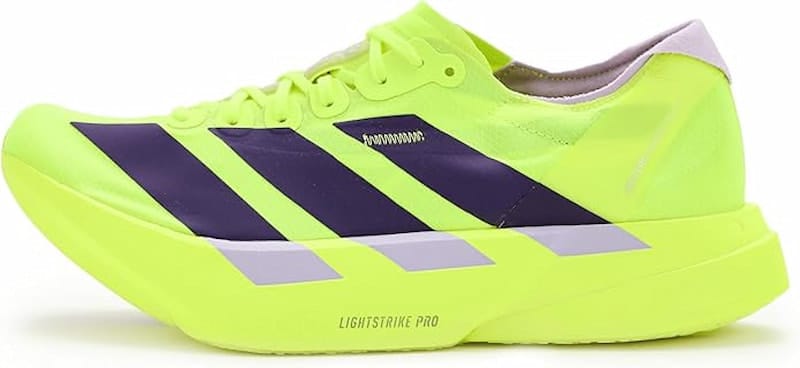
Race-day shoes need to feel fast without falling apart late in the race. The adidas Adizero Adios Pro 4 gets that balance right with a light build, high-performance foam, carbon-infused EnergyRods, and enough cushioning for longer distances.
For runners who want one serious racing shoe for multiple distances, this is a top pick. The ride is energetic and efficient, but the shoe still has enough underfoot protection for half marathons and marathons.
If you want an even lighter, sharper-feeling racer, the Nike Vaporfly 4 is worth a look. If you prefer a carbon-plated shoe with a bit more stability underfoot, consider the Saucony Endorphin Pro 5.
Best use:
Road races from 10K to the marathon, race-pace workouts, and important pre-race sessions.
Key specs:
| Weight | 7.1 oz / 201 g men’s; 6.4 oz / 181 g women’s |
|---|---|
| Heel-to-toe drop | 6 mm |
| Stack height | 39 mm heel / 33 mm forefoot |
| Support | Neutral |
| Cushioning | Maximum / responsive |
| Surface | Road |
Pros:
- Fast, efficient ride for racing
- Lightweight for a highly cushioned super shoe
- Enough protection for half marathon and marathon racing
- Works across multiple race distances, from 10K to the marathon
- Continental rubber outsole adds reliable grip
Cons:
- Expensive for a shoe most runners will not use every day
- Not built for regular daily training
- Fit may feel snug or low-volume for some runners
- Less stable than a daily trainer, especially at slower paces
Best running shoe for speed workouts: Saucony Endorphin Speed 5
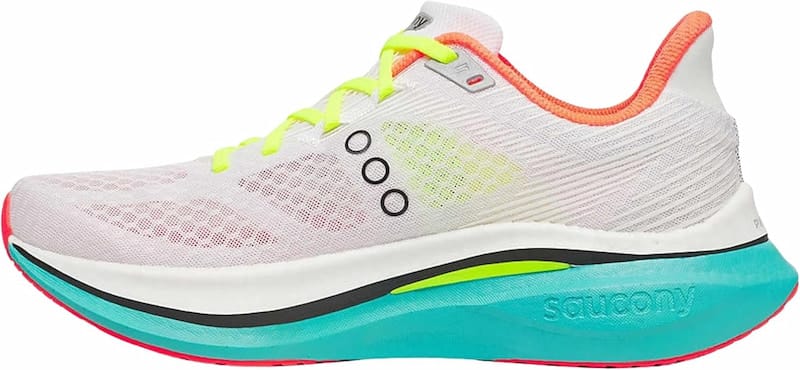
The Saucony Endorphin Speed 5 is our strong choice for tempo runs, interval sessions, fartlek workouts, and marathon-pace blocks. It has more snap than a standard daily trainer, but it is less aggressive and more training-friendly than most carbon-plated racing shoes.
The HOKA Mach 6 is the simpler choice if you want a lighter workout shoe without a plate. The New Balance FuelCell Rebel v5 is a better match if you prefer a softer, more flexible ride.
Best use:
Speed workouts, including intervals, tempo runs, and faster blocks inside long runs.
Key specs:
| Weight | 8.4 oz / 238 g men’s; 7.2 oz / 204 g women’s |
|---|---|
| Heel-to-toe drop | 8 mm |
| Stack height | 36 mm heel / 28 mm forefoot |
| Support | Neutral |
| Cushioning | High / responsive |
| Surface | Road |
Pros:
- Lively, responsive ride for speed workouts
- Nylon plate adds snap without the rigid feel of many carbon racers
- More training-friendly than a dedicated race-day shoe
- Available in regular and wide options in some markets
Cons:
- Expensive for a workout shoe
- May feel like too much shoe for runners who prefer a simple lightweight trainer
- Nylon plate may feel unnecessary for runners who mostly run easy
Best budget running shoe: New Balance Fresh Foam 680v9
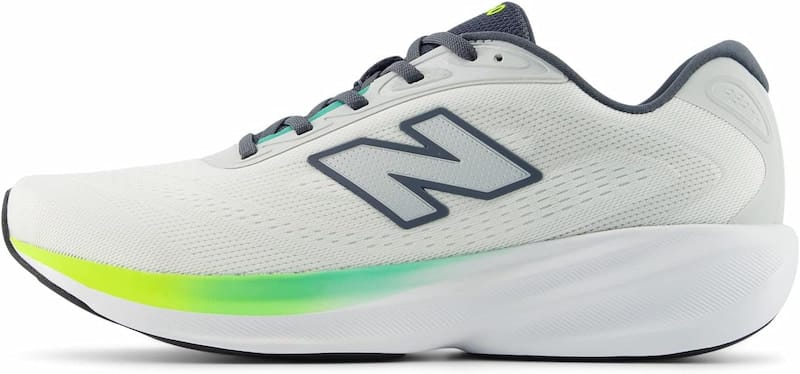
Comfortable cushioning, breathable mesh, a durable rubber outsole, and a simple neutral ride that works for easy miles—the New Balance Fresh Foam 680v9 covers the basics well and keeps the price approachable.
This is the kind of shoe that makes the most sense for newer runners, casual runners, or anyone who wants a comfortable running shoe for regular use without paying premium daily-trainer prices. It will not feel as lively or protective as more expensive shoes in this guide, but it gives you enough comfort and durability for regular low-to-moderate mileage.
The Brooks Revel 8 is a good alternative if you want a more versatile run/gym/everyday shoe. If you find the Saucony Ride 18 on sale, it can be a better performance value for runners who want a more capable daily trainer.
Best use:
Easy runs, beginner training, treadmill runs, gym sessions, walking, and short-to-moderate daily mileage.
Key specs:
| Weight | 9.1 oz / 259 g men’s; 7.3 oz / 206 g women’s |
|---|---|
| Heel-to-toe drop | 8 mm |
| Stack height | 29 mm heel / 21 mm forefoot |
| Support | Neutral |
| Cushioning | Soft / moderate |
| Surface | Road |
Pros:
- Low official price for a real running shoe
- Comfortable cushioning for easy miles
- Breathable mesh upper
- Durable rubber outsole for regular use
- Available in wide options in some markets
Cons:
- Less energetic than higher-end daily trainers
- Not ideal for long runs or high-mileage training blocks
- Limited performance feel for speed workouts
Best treadmill running shoe: Nike Pegasus 41
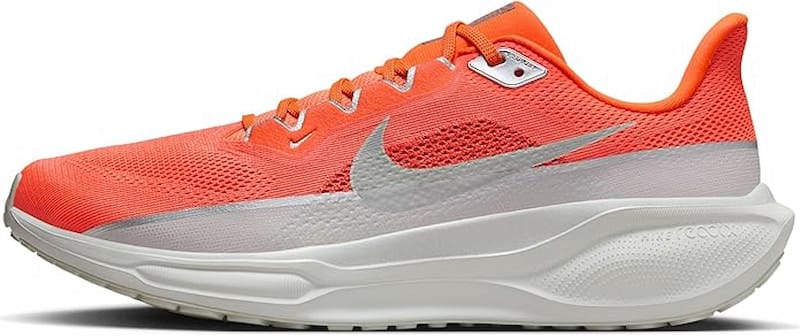
Treadmill running rewards a shoe that feels secure and comfortable at repetitive paces. The Nike Pegasus 41 works well here because it has enough cushioning for daily indoor miles, enough grip for the belt, and a flexible feel that does not seem overbuilt for indoors.
It is also practical beyond the treadmill. You can use it for outdoor easy runs, gym sessions, travel, and general training, which makes it a better buy than a shoe that only feels useful indoors.
The Brooks Ghost 17 is a strong alternative if you want a softer, more comfort-first treadmill shoe. The HOKA Clifton 10 may be more appealing if you prefer a more cushioned ride for longer indoor runs.
Best use:
Treadmill runs, gym sessions, easy indoor miles, and runners who want one shoe for both treadmill and road.
Key specs:
| Weight | 10.0 oz / 283 g men’s; 8.7 oz / 247 g women’s |
|---|---|
| Heel-to-toe drop | 10 mm |
| Stack height | 37 mm heel / 27 mm forefoot |
| Support | Neutral |
| Cushioning | Moderate / responsive |
| Surface | Road, treadmill |
Pros:
- Smooth, versatile ride for treadmill and road running
- Good grip for treadmill belt running
- Cushioned without feeling overly bulky indoors
- Breathable upper for warm gym environments
- Often easy to find on sale
Cons:
- Fit may feel narrow for some runners
- Not as soft as plush trainers like the HOKA Clifton 10
- Not ideal for runners who want maximum cushioning
- Less exciting for fast workouts than a dedicated speed shoe
Best trail running shoe: HOKA Speedgoat 7
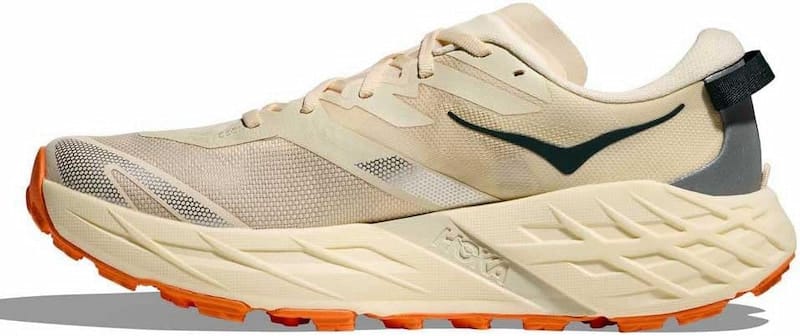
The HOKA Speedgoat 7 brings together the features most runners need when the surface gets uneven: protective cushioning, a secure upper, a grippy Vibram outsole, and enough structure to feel confident on mixed terrain.
It is especially useful if you are moving from road running to trails and want a shoe that feels comfortable rather than overly minimal or harsh. The updated foam gives this version a livelier feel than older Speedgoats, but its main strength is still long-run comfort, protection, and reliable grip.
As an alternative, we chose the Saucony Peregrine 16—if you want a lower-profile, more agile trail shoe. The Brooks Cascadia 19 may be a better match if you want a more protective option for technical terrain and hiking.
Best use:
Trail runs, dirt paths, rocky terrain, long trail days, hiking, and runners who want more grip and protection than a road shoe can offer.
Key specs:
| Weight | 9.6 oz / 272 g men’s; 8.6 oz / 244 g women’s |
|---|---|
| Heel-to-toe drop | 5 mm |
| Stack height | 38 mm heel / 33 mm forefoot |
| Support | Neutral |
| Cushioning | Plush / protective |
| Surface | Trail |
Pros:
- Protective cushioning for longer trail runs
- Vibram Megagrip outsole for traction on mixed terrain
- Secure upper
- Works well for both trail running and hiking
Cons:
- More shoe than some runners need for light gravel or smooth paths
- Not as nimble as lower-profile trail shoes
- May feel too tall or cushioned for runners who want strong ground feel
- Fit may not work for every foot shape, especially on technical descents
How to choose the right running shoes
Even the best-rated shoe may not be the right one for you. Start with your main use case: daily training, long runs, speedwork, racing, treadmill running, or trails. A soft max-cushion shoe can feel great for easy miles but clunky for intervals, while a carbon-plated racer may feel fast on race day but too aggressive for everyday training.
Fit matters just as much as features. If possible, try shoes on later in the day, wear your usual running socks, and make sure you have enough room in the toe box. Your toes should not feel squeezed, and your heel should feel secure without slipping.
Also consider how much support and cushioning you actually like. Some runners prefer a softer, more protective ride, while others feel better in a firmer, more stable shoe.
Finally, remember that running shoes wear down. If your current pair feels flat, uncomfortable, or uneven after months of use, or if you regularly notice unusual pain during or after runs, replacing your running shoes may matter more than chasing the newest model.
What to avoid when buying running shoes
Do not choose a shoe only because it is popular, on sale, heavily promoted by influencers, or worn by elite runners. The best shoe for you should match your running goals and the way the shoe feels at your usual pace.
Avoid buying a race-day shoe for everyday training unless you know exactly why you want it. Carbon-plated shoes can feel fast, but they are often expensive, less durable, and built more for race pace than everyday miles.
Also be careful with shoes that feel “almost right” in the store. For example, a tight toe box or slipping heel rarely improves once you start running. If a shoe feels wrong from the beginning, it is usually better to try a different model or size.
FAQ
What is the best running shoe overall?
For most neutral runners, the ASICS Novablast 5 is our top overall pick because it works well for daily training, easy runs, long runs, and moderate-paced runs. Still, the best running shoe for you depends on your foot shape, training goals, preferred cushioning, and whether you need extra support.
What running shoes are best for beginners?
Beginners usually do best in a comfortable, predictable daily trainer rather than a very light racing shoe or highly technical model. The Brooks Ghost 17 is our top beginner pick because it offers a smooth, stable-feeling ride for easy runs, walk breaks, and gradually building mileage.
How much should I spend on running shoes?
Most quality running shoes cost between about $120 and $180. Budget models can work well for beginners or lower-mileage runners, while premium trainers and race-day shoes usually cost more. You do not need the most expensive shoe unless it clearly matches your training needs.
Are expensive running shoes always better?
No. More expensive shoes may use lighter foams, plates, or premium uppers, but that does not automatically make them better for your running. A well-fitting $150 daily trainer is often a better choice than a $250 racing shoe you rarely use.
Should I choose neutral or stability running shoes?
Choose a neutral shoe if you feel comfortable and stable without extra support. A stability shoe may be helpful if you prefer more guidance or have been advised to use supportive footwear. If you regularly have pain or recurring discomfort, it may be worth checking with a running-shoe specialist or medical professional.
Are cushioned running shoes better?
Not always. Cushioned shoes can feel more comfortable and protective, especially for easy runs, long runs, and recovery days. But some runners prefer a firmer and lighter ride. The best amount of cushioning is the one that feels comfortable and stable at your usual pace.
Can I use race-day shoes for daily training?
You can, but it usually is not the best choice. Carbon-plated race shoes are built more for race pace than everyday miles. They are often expensive, less durable, and less comfortable at slower speeds than daily trainers.
How often should I replace running shoes?
Many running shoes last roughly 300 to 500 miles, but that varies by shoe, runner, surface, and training style. If your shoes feel flat, uneven, or uncomfortable, or if the outsole and midsole show heavy wear, it may be time to replace them.
How we update this guide
Running shoe models, prices, and availability change throughout the year. We review this guide periodically and update it when major new models are released, older models become hard to find, specs change, or a shoe no longer feels like the strongest pick.
When we update the guide, we may revise product recommendations, pricing, availability notes, specs, pros and cons, and alternative picks.
We may keep an older version in the guide when it remains widely available and offers better value than the newest release. We may also remove a shoe if it becomes hard to find, receives consistent negative feedback, or no longer makes sense for its category.
Some links in this article are affiliate links. If you buy through them, we may earn a small commission at no extra cost to you.
We only recommend shoes we believe are worth considering based on editorial research, product specs, expert reviews, runner feedback, and the needs of different types of runners. These partnerships help support our free running content, but they do not influence our recommendations.