Table of Contents
Slow jogging is a way of running so gently that it can be slower than a brisk walk. You take tiny, quick steps, land softly on the middle of your foot, and keep the effort easy enough to talk or smile. It also counts as running, even at that slow pace.
The method came out of Japan, and the research behind it is real: regular slow jogging is linked to lower blood pressure, better fitness, and a longer, healthier life, with little strain on the joints.
If running has always felt too hard or too fast, slow jogging might change your mind. Here's how it works, and how to do it right.
What slow jogging is
Slow jogging is a running method built around a very easy, sustainable pace. The Japanese exercise physiologist Hiroaki Tanaka developed it over decades of research at Fukuoka University, and he called the target effort niko niko pace, from the Japanese word for smile.
The idea is to run in short, light steps slowly enough that you could smile and chat the whole way. If you are too winded to talk, you are going too fast.
It began in Japan and has since become popular worldwide among runners who want an easy, low-pressure way into the sport.
Hiroaki Tanaka, the man behind slow jogging
Slow jogging is the life's work of one man: Hiroaki Tanaka, a Japanese exercise physiologist born in 1947. He was a professor at Fukuoka University and founded its Institute for Physical Activity, where he spent decades studying how the body responds to low-intensity exercise.
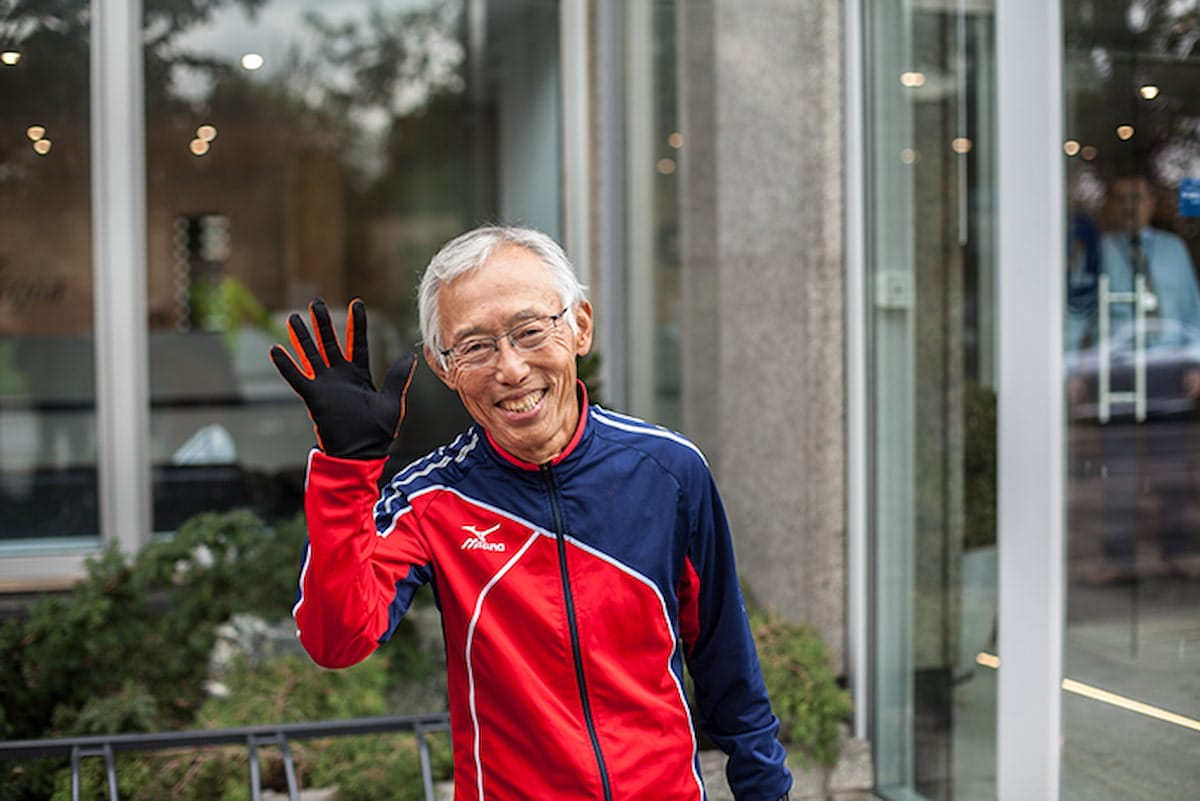
As a younger runner, Tanaka’s marathon best was a respectable but ordinary 4 hours and 11 minutes. He then applied his own research, filling most of his training with very easy running at "smiling" niko niko pace. By the age of 50, he had brought his marathon time down to around 2 hours and 40 minutes, a remarkable improvement built almost entirely on slow miles.
He ran more than 60 marathons over his life without a serious injury, which he credited to the gentle technique at the heart of the method. His message went against the grain of running culture: you do not need to suffer, and slow, smiling miles can make you both healthier and faster.
Tanaka spread the idea through clubs across Japan and, with the Polish translator and instructor Magdalena Jackowska, he captured the method in a 2016 book that took slow jogging global.
He died in 2018, though the method he built keeps growing around the world.
Is slow jogging really running?
Yes, even when it looks like walking. The difference between walking and running has nothing to do with speed. It comes down to a flight phase, a brief moment when both feet leave the ground at once. Walking always keeps one foot down. Slow jogging, however slow, has that airborne moment, which makes it running.
That small difference matters. Because you push off with both feet leaving the ground, slow jogging works your muscles harder and, according to Tanaka's research, burns close to twice the calories of walking at the same speed. We go deeper into what counts as running in our article on how slow is too slow to call it running.
Does slow jogging actually work?
It does, and the health benefits are well studied. Tanaka spent three decades showing that intensity matters more than distance for most of running's health benefits, and that a very easy pace is enough to deliver them.
Regular slow jogging is linked to a range of benefits:
- Lower blood pressure. Endurance exercise reliably lowers resting blood pressure, and Tanaka's studies found this even in people in their seventies.
- A longer life. Even slow, low-dose running is linked to a lower risk of early death and several added years, with no need for speed.
- Better cholesterol and metabolism. Slow jogging raises HDL, the good cholesterol, and helps manage blood sugar and weight.
- Aerobic fitness. The easy miles build the same aerobic base that underpins all endurance running.
- Lower impact on the joints. Short steps and a high cadence lower the force through your legs, and recreational running does not wear out the knees.
- A better mood. Like other easy running, it lifts mood and eases stress.
Slow jogging suits best beginners and older adults especially, along with anyone returning from a break, since it delivers real exercise at an effort almost anyone can sustain.
Why slow jogging feels good
The niko niko pace is easy enough to enjoy, and Tanaka built the whole method around that idea. If you cannot smile, he said, you are going too fast.
There is biology behind the good mood, too. Tanaka's team found that slow jogging, unlike walking, triggers a release of endocannabinoids, the body's own feel-good chemicals behind the so-called runner's high. Because the effort stays low, it does this without the surge of stress hormones that a hard run brings, so you finish feeling relaxed.
Research from his institute also linked easy running to better mood and sharper thinking. The result is exercise that lifts your spirits while you do it, which makes it much easier to keep up.
How to do slow jogging
Slow jogging takes a little practice, since the tiny steps feel strange at first. Here’s how to do it right:
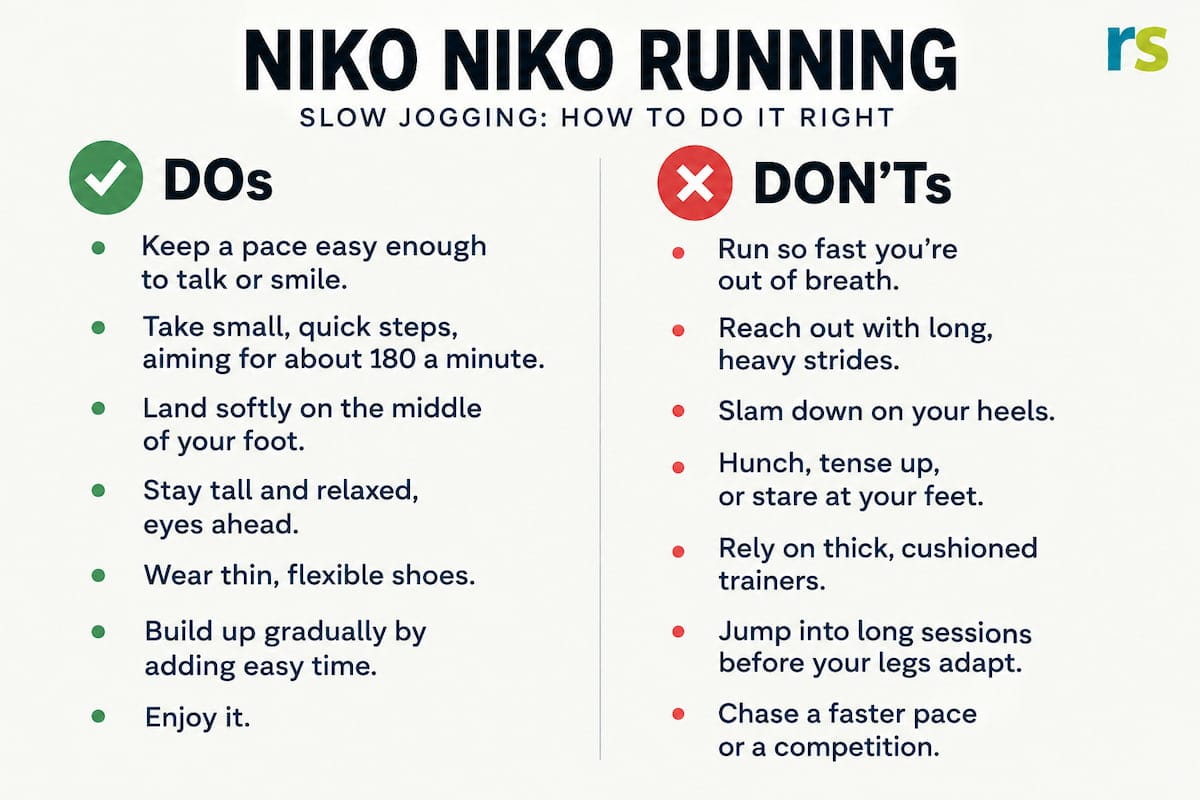
- Start very slowly. Aim for a pace of about 12 to 20 minutes per mile (7:30 to 12:30 per kilometer). For many beginners that is slower than a brisk walk.
- Aim for about 180 steps a minute. Set a metronome app to 180 beats, or pick songs at that tempo, and match your feet to the beat.
- Take tiny steps. Keep each step short, landing with your foot almost under your body. Your stride should feel about half its normal length.
- Land on your midfoot. Touch down softly on the middle of your foot, letting the heel settle a moment later. Thin, flexible shoes help you feel it.
- Stay relaxed and upright. Keep your shoulders loose, your arms easy, and your eyes ahead. Smile, since that is the whole point of the pace.
- Keep the effort easy. You should be able to talk or hum the entire time. If you cannot, slow down.
Tanaka suggested around 180 minutes of slow jogging a week, and noted you can split it up: one daily half-hour, or short ten-minute jogs through the day. Even a smaller dose helps, so start with what fits and build from there.
The short video below, from the International Slow Jogging Association, shows the technique and niko niko pace in real time.
Common mistakes to avoid
Slow jogging looks simple, and it is, though a few common mistakes stop people getting the benefits. Watch out for these:
- Going too fast. The most common error. If you cannot talk or smile, you are running too hard for niko niko pace.
- Taking long strides. Overstriding puts your foot down ahead of your body and jars your joints. Keep steps short and quick.
- Pounding the heel. A hard heel strike defeats the gentle, low-impact point of the method. Come down softly on the midfoot.
- Wearing thick, cushioned shoes. Chunky heels encourage heel striking and dull your feel for the ground. Thin, flexible shoes work better.
- Tensing up. Tight shoulders and clenched fists waste energy. Stay loose and relaxed.
- Doing too much, too soon. The midfoot landing loads your calves and Achilles in a new way, so build up slowly to avoid soreness.
- Chasing speed to progress. You get fitter by adding easy time, and the pace stays gentle throughout.
Slow jogging vs walking: which is better?
Slow jogging and brisk walking can move you at nearly the same speed, so people often ask which is better. The answer depends on your goal.
Slow jogging asks more of your body. That flight phase means more of a cardiovascular workout and a bigger gain in fitness. And because both feet leave the ground, your legs absorb more force on landing than they do while walking.
Walking is the gentler option because it puts less stress on the joints, feels easier, and suits almost anyone at any fitness level.
Slow jogging wins on fitness and calorie burn, while walking wins on being easy on the body.
| Slow jogging | Brisk walking | |
|---|---|---|
| Calories burned | Higher than walking at the same speed | Lower |
| Cardio benefit | Higher | Moderate |
| Impact on joints | Higher, though softened by short steps | Very low |
| Best for | Building fitness in less time | Gentle movement for anyone |
Slow jogging for weight loss
Slow jogging can support weight loss, with a couple of advantages over both walking and harder running.
As covered above, it burns more calories than walking at the same speed, thanks to the flight phase. It is also easy on the body and enjoyable, so most people can keep it up for longer and more often, which is what adds up over time.
There is a fuel angle as well. At the very easy niko niko effort, below the point where you start breathing hard, your body draws a larger share of its energy from fat. Tanaka made this a selling point of the method, and his book describes benefits for people managing weight and even type 2 diabetes.
One important thing to mention, which we cover in depth in our guide to why running does not always lead to weight loss: no form of exercise removes fat on its own. Weight loss still comes down to your overall energy balance. Slow jogging burns calories and supports a healthy weight, but the results only show when you pair it with sensible, balanced eating.
Slow jogging around the world
Slow jogging began in Japan, but it has since spread across the world, often under slightly different names.
In Japan, it grew from Tanaka's research into a popular pastime, with slow jogging clubs meeting in parks across the country. The phrase niko niko, or smile, still defines the pace, slow enough to grin the whole way.
In South Korea, slow jogging arrived around 2012, and the Korea Slow Jogging Association formed in 2016 to train instructors and run classes. For years it stayed niche. More recently it has become a nationwide habit, with city-run programs in Seoul and lines of people trotting through parks in a gentle, penguin-like shuffle. Because everyone moves at nearly walking pace, no one worries about keeping up or chasing a faster time.
In Taiwan, the same idea took hold as super-slow jogging, popular with office workers and older adults, and promoted by local coaches as an easy way to build strength and stay active into old age.
In Poland, slow jogging found an early foothold outside Japan. Tanaka visited several times from 2013, a Polish edition of his book followed, and a national association now runs regular classes and clubs.
In the United States, the method reached a wide audience when Tanaka's book was published in English in 2016, and interest has grown steadily since, helped by social media and a broader shift toward gentler, less competitive running.
Today the method keeps spreading around the world through social media, and it is easy to see why. This is a form of running that asks for no speed and no suffering, only a smile.
Where to learn more about slow jogging
If you want to go deeper, read Tanaka's own book. Slow Jogging: Lose Weight, Stay Healthy, and Have Fun with Science-Based, Natural Running, written with Magdalena Jackowska, is the most complete guide to the method, straight from the person who created it.
It explains the science behind the niko niko pace and walks through the technique in detail, with sample plans and photos to follow along. The writing stays simple and practical, so it suits runners at any level, from a first-timer to a seasoned marathoner.
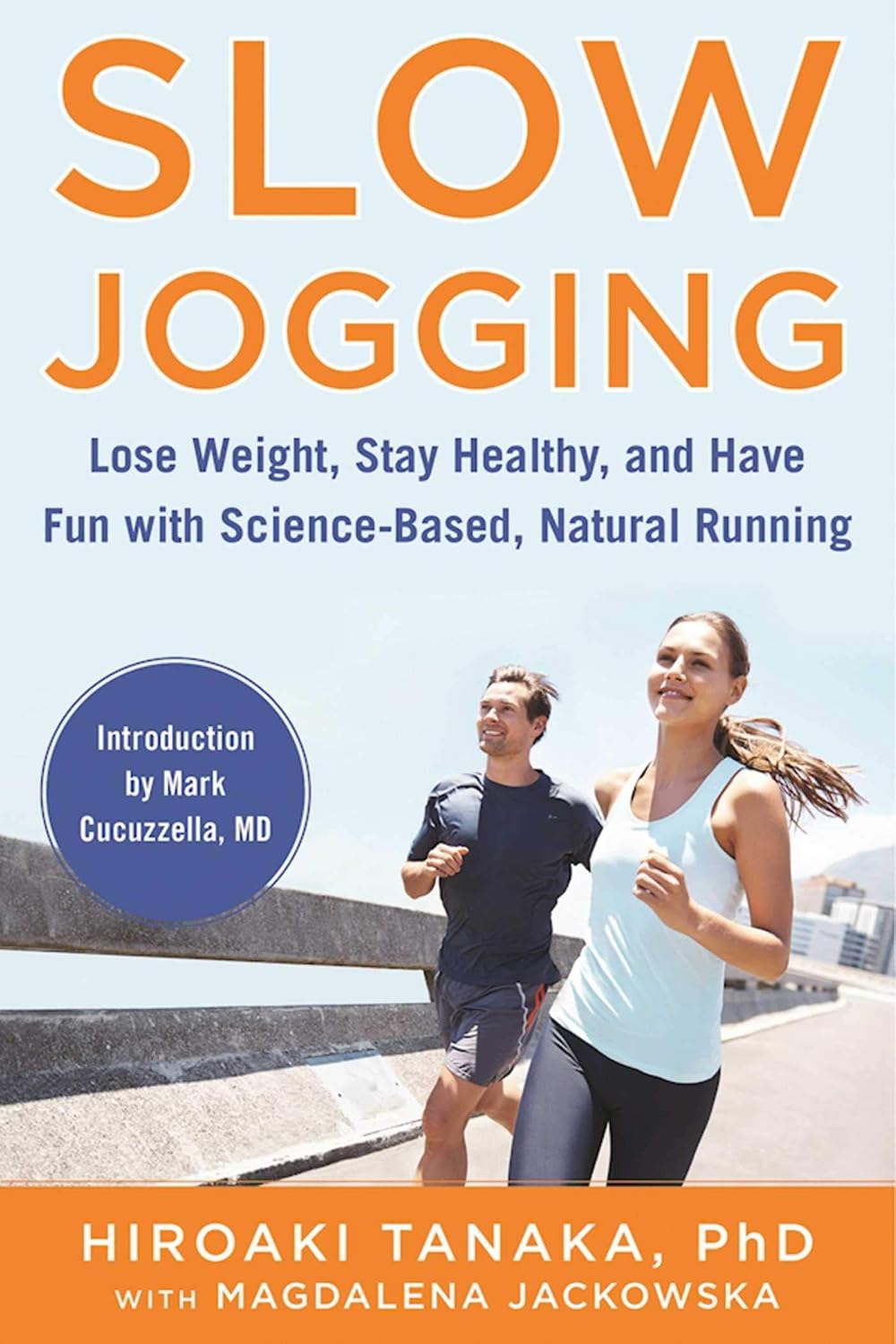
Once you have finished it and want more to read, our roundup of the best running books has plenty of other titles worth your time.
So, should you try slow jogging?
Slow jogging is a rare thing in fitness. It is gentle and open to almost anyone, yet the science behind it is real. It counts as running, it burns more calories than walking, and it is linked to lower blood pressure and a longer, healthier life, all at a pace slow enough to smile through.
If you have wanted to run but found it too hard on your body, slow jogging is worth a try. Start with short, easy sessions at a talking pace, keep your steps small and quick, and let the smile be your guide. Speed can come later, or never. Either way, you are running.
Frequently asked questions
Is slow jogging good for weight loss?
It can help. Slow jogging burns more calories than walking at the same speed, and it is easy to keep up for a long time. As with any exercise, weight loss also depends on how you eat.
Is slow jogging better than walking?
Neither is better for everyone. Slow jogging burns more calories and builds more fitness, while walking is gentler on the joints. The best choice depends on your goal and what your body handles well.
How fast is slow jogging?
Very slow. For most people the pace falls between about 12 and 20 minutes per mile (7:30 to 12:30 per kilometer), which can be slower than a brisk walk. The pace is right when you can talk comfortably.
Is slow jogging bad for your knees?
No, for most people. The short steps and high cadence lower the force through your legs, and recreational running is not linked to more knee arthritis. Build up slowly, as with any running.
Can beginners and older adults do slow jogging?
Yes. It was designed with them in mind. The easy effort and soft landing make it one of the most accessible ways to start running at almost any age.
Some links in this article are affiliate links. If you choose to buy a book through them, we may earn a small commission at no extra cost to you. Thank you for supporting our work.