Table of Contents
If running has become a part of your life, then a good pair of running shoes is your faithful companion.
Even the best and most advanced models can only work well for a short time. Over time, the cushioning disappears, the sole wears out, and the fabric tears. Running in worn-out shoes directly leads to discomfort, overload, and injury. So, it is important to notice when sneakers stop performing their main function—protecting you.
In this article, we’ll give you a checklist to help you figure out if your sneakers are done for, and share tips on how to extend their life.
How do you know when it’s time for a new pair?
1. High frequency of use
Even if your shoes show no visible signs of wear, they may still need to be replaced. The cushioning could be worn out, reducing shock absorption and increasing your risk of injury.
The average lifespan of road running shoes is about 300–500 miles (480–800 km).
- If you run 5–6 times a week, your shoes may wear out within 4–6 months.
- If you run less frequently (1–2 times a week), they may last 8–12 months.
That’s why tracking your mileage is important. Apps like Strava make this easy, or you can simply write the purchase date on your shoes and calculate the mileage yourself.
Related: 10 Running Gadgets That Are Worth the Investment
2. New pain
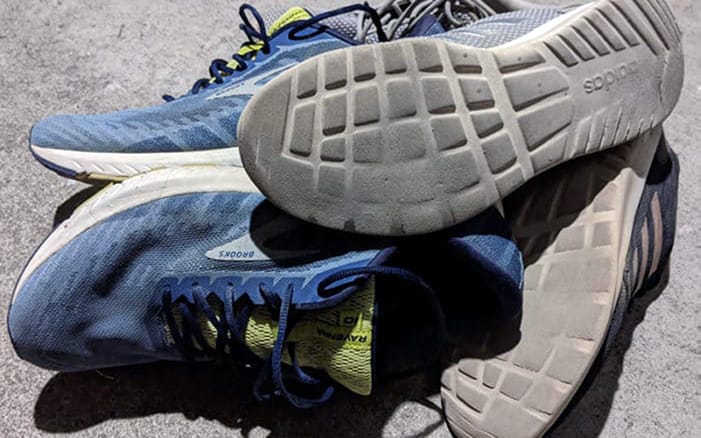
If you start experiencing pain that wasn’t there before—whether in your knees, heels, or shins—it may be a sign that the cushioning has worn down and the shoe no longer supports your foot properly.
Calluses, chafing, and blisters can also indicate that your shoes have lost structural integrity.
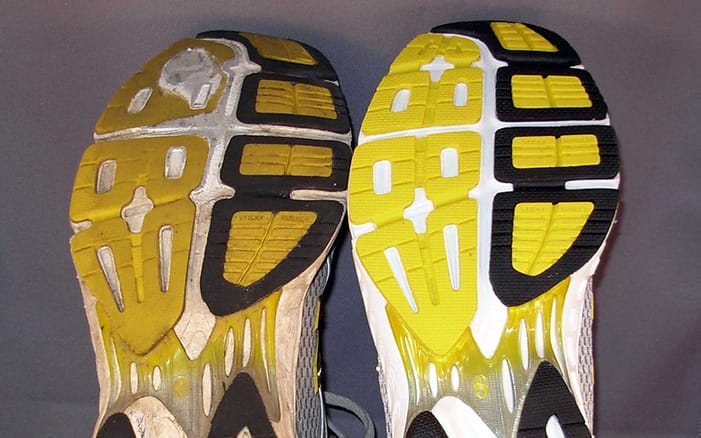
3. Worn-out tread
The tread is crucial for traction on the running surface.
If it becomes smooth or worn down to the foam, your shoes lose their ability to absorb impact and provide stability. Continuing to run in them increases your risk of slipping, falling, and getting injuries.
Related: 35 Common Running Mistakes and How to Avoid Them
4. Worn textile upper and inner heel
If the fabric upper and the inner heel area are significantly worn out, you may be wearing the wrong size.
When buying your next pair, consider going up or down half a size to improve fit and reduce premature wear.
5. The sole no longer springs back or compresses too easily
When the cushioning wears out, your feet don’t get the necessary support. Press down on the midsole—if it compresses too easily and doesn’t spring back, the foam is past its prime.
Running in shoes with reduced shock absorption increases the risk of blisters, pain, shin splints, and stress fractures.
Related: 7 Secrets to Running Faster Without Injury
6. Tired feet after running
If your feet feel unusually heavy, weak, or uncomfortable after a typical run, this could be another sign that your shoe cushioning has worn out.
Try running in a new pair—if the difference is noticeable, it’s time for an upgrade.
How to make your running shoes last longer?
- Store them in a dry, clean place. Moisture and temperature changes can degrade the glue and foam.
- Rotate your shoes. Having at least two pairs and alternating them can slow down wear. This also gives the foam time to fully recover between runs.
- Choose shoes for specific conditions. Use different shoes for road running and trail running. Don’t wear your running shoes for everyday walking.
- Untie them before taking them off. This preserves the shoe’s heel structure and extends its lifespan.
- Avoid machine washing. Instead, clean them with a damp cloth. Washing machines can damage the foam and adhesives.
- Never dry them in direct heat. Drying them in a dryer or near a heater can break down the materials. Instead, stuff them with newspaper to absorb moisture.
What to do with old running shoes?
Just because your shoes are no longer suitable for running doesn’t mean they have to go to waste.
- Use them for walking or gardening.
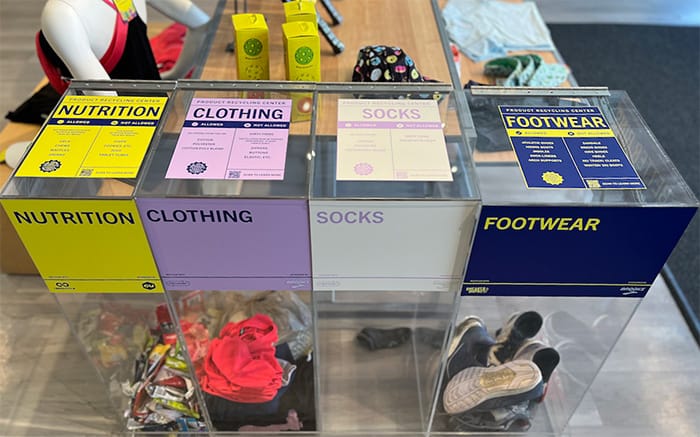
- Recycle them. Many brands, such as Nike and Adidas, accept old sneakers and recycle them into new materials.
- Donate them to charity. If they’re still in decent condition, give them to someone in need.
Running shoes are essential gear that affects your comfort, joint health, and performance. Keep track of their condition, monitor mileage, and pay attention to your body’s signals. That way, you’ll stay injury-free and enjoy running to the fullest!
By Lena Sage