

You can run easily and simply, without gadgets, without numbers, just in sneakers, and by feel. This is your choice, and it is absolutely normal. But if you want to train smarter, recover faster, and stay injury-free, the right technology can be a game-changer.
Today, there are plenty of devices that make running more comfortable—from GPS watches and power sensors to bone-conduction headphones and recovery tools.
We’ve gathered 10 useful gadgets that can support your progress. Not for the hype but to help you run longer, easier, and with more joy.
1. GPS running watches
Just using a phone is not enough to accurately track your runs. GPS watches allow you to analyze workouts in real timeand provide access to key data such as:
- pace and speed,
- distance and elevation gain,
- heart rate and heart rate zones,
- VO2max,
- cadence,
- stride length.
Thus, GPS watches help improve performance, control heart rate, and analyze progress.
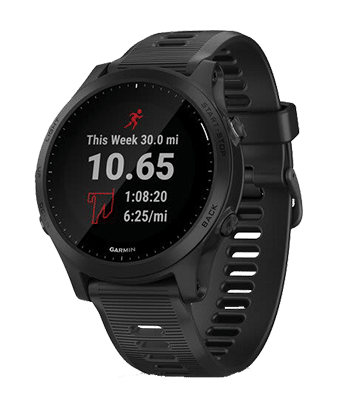
Some of the best models are:
2. Recovery trackers
Ignoring recovery is one of the most common mistakes runners make. Even the most advanced watches can track sleep, heart rate, and activity, but when it comes to deep recovery and the body's state outside training, they often fall short.
Watches are primarily designed for pace, heart rate, routes, and intervals. But this is not enough if you want to understand whether you have recovered from yesterday's effort, learn to adjust the volume of training depending on how your body feels, avoid overtraining and injuries, and recover not blindly, but according to clear metrics.
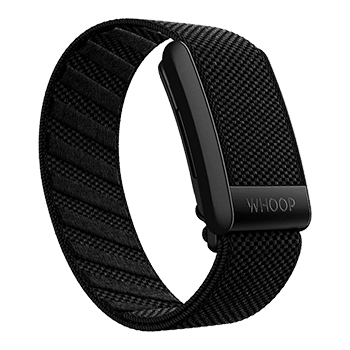
This is where gadgets like WHOOP or Oura Ring come into play. They don't rely on distance, but on your internal state:
- resting heart rate
- heart rate variability (HRV)
- sleep quality and sleep phases
- stress level
- readiness for exercise/recovery level.
These metrics help you train better, progress faster, and avoid injuries.
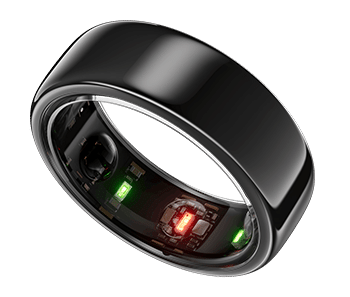
Another big win for WHOOP and Oura Ring—you barely feel them. That is why they are comfortable to wear 24/7, without taking them off even at night.
Nighttime is when your body gives off the most important signals: how you’re recovering, how you’re sleeping, howyour heart and breathing are doing. The less distraction, the better the data.
If you don't like to sleep with watches, Oura and WHOOP are great choices. They work without making noise and require no attention.
Best models:
3. Bone conduction headphones
If you often run on the streets, next to cars, or in the dark, it is important to hear what is happening around you.
Regular headphones block out outside noise, which can be dangerous in the city. Bone conduction headphones transmit sound through your cheekbones, keeping your ears open. You can enjoy music while still hearing what's around you, like car horns, voices, and barking dogs.
Pick a model with moisture protection, like IPX5 or higher. This way, you can use it in the rain or during sweaty workouts without worrying.
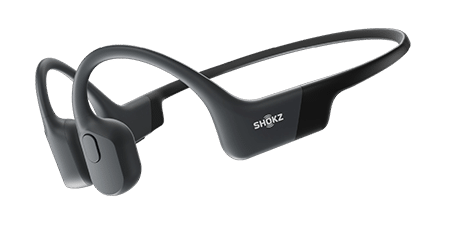
For example, Shokz OpenRun is a popular model with bone conduction and IP67 protection. They do not fall out, do not block your ears, and fit securely on your head. The battery lasts up to 8 hours. Ideal for city running and long-distance runs.
Best choice: Shokz OpenRun
4. Running power meters
Running power is one of the most accurate indicators of load and effort. It shows how much energy you’re using right now. It considers climbs, wind, surface, and fatigue, this is different from pace or heart rate.
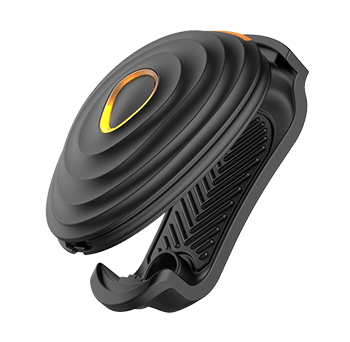
Stryd Footpod is a small sensor that clips onto your shoe laces. It's lightweight, doesn’t get in the way, and you barely notice it while running. The device measures running power in watts and tracks metrics like cadence (step frequency), stride length, vertical oscillations, and more.
Running power meter helps:
- maintain a stable effort throughout the entire distance (especially in marathons and trails)
- optimize the pace on hills
- avoid burnout at the start by properly distributing efforts
- work on running technique and efficiency.
Stryd syncs with your watch (Garmin, Coros, Apple Watch, etc.) and the Stryd app. You don't need a phone to train, but you need one to view detailed analytics after your run.
5. Massage guns
After running or intense workouts, muscles often become stiff and tense. If they are not relaxed, this can lead to soreness, decreased mobility, and even injury.
In these situations, a massage gun is a great help. This small device speeds up recovery, relieves tension, and improves your well-being.
It is especially useful after long runs, interval training, or heavy loads when the muscles need extra attention.
Related: 10 Budget-Friendly Gifts For Runners You Can’t Go Wrong With
When choosing, consider the impact force, it affects how deeply the gun can work into the muscle tissue. The device's weight and shape matter too. If you plan to use it on yourself, pick a light and ergonomic model. This way, your hand won't tire out. And if you plan to use it at home, pay attention to the noise level—some models work almost silently.
One of the most popular options is Theragun Mini. It is lightweight, fits comfortably in the hand and easily fits into a bag, so you can take it anywhere.
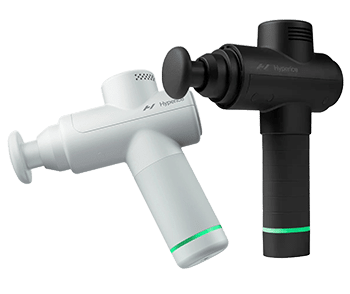
If you need a more powerful and multifunctional option for deep massage, the Hyperice Hypervolt is the one for you. It has several attachments and does a great job of restoring your body after serious work.
Best models:
6. LED running lights
If you run early in the morning or in the evening when it’s dark, it’s important not only to see where you're stepping but also to be clearly visible to drivers and cyclists.
A bright LED light helps you do both: it lights up the road ahead and makes you visible from up to 200 meters away. It doesn’t interfere with your movement, it is lightweight, easy to charge, and quickly becomes your must-have running companion for dark hours.
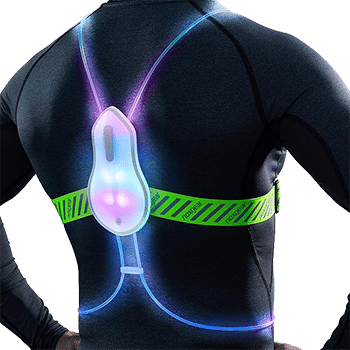
For maximum safety, it's best to combine a headlamp (to see the road) with wearable lights (to make you visible from all angles).
Related: 9 Gear Essentials for Women Runners
When choosing a running light, look for: a lightweight design that stays in place while running, strong brightness for clear visibility, and water and dust resistance for all-weather runs.
Best models:
7. Compression pants for recovery
After long runs, marathons, and trails, your legs need more than just rest, they need deep recovery.
Pneumatic compression pants, like the Normatec 3 from Hyperice, help reduce fatigue. They improve blood and lymph flow, reduce swelling, and cut recovery time after intense workouts.
The device works simply: it compresses and relaxes parts of the legs. This creates a massage effect and pushes out extra fluid so that the muscles recover faster.
Inflammation goes down, and the “heavy legs” feeling fades sooner.
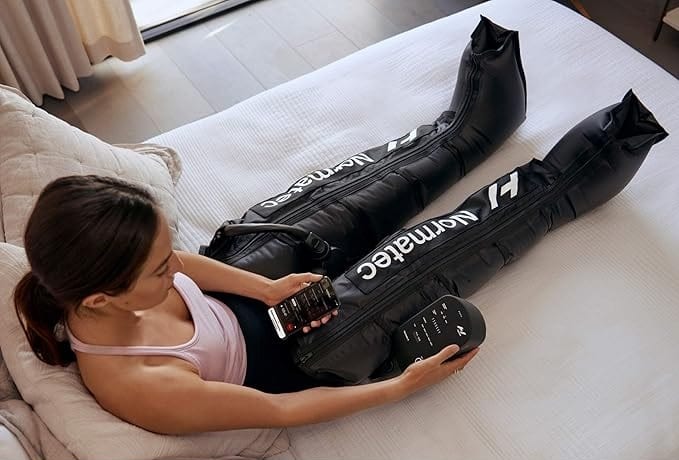
Before buying, consider a few things: the number of compression zones, whether you can adjust the pressure, and how easy it is to use. These all impact comfort and efficiency.
These devices are a big investment in recovery, and they are expensive. The Normatec 3 is a well-known, high-quality option. However, it can cost between $700 and $900.
Therefore, if the budget is limited, you can start with alternative and more affordable methods of recovery: a foam roller for self-massage, a massage gun for targeted muscle relief, or at least a contrast shower and compression socks.
Yes, they won't fully replace pneumatic pants, but they can still provide great results with regular use. If recovery is an important part of your training and you want to get the most out of each run, such a gadget will definitely not be superfluous.
Best choice: Normatec 3 by Hyperice
8. Сhest heart rate monitors
Heart rate zone training is the foundation of mindful and effective running. If you track your heart rate, you don’t overload your body, and you make steady progress at the right intensity—and often faster.
Chest heart rate monitors are more accurate than the optical sensors in watches. They record your heart rate better even during sudden movements or in cold weather when watches can be wrong.
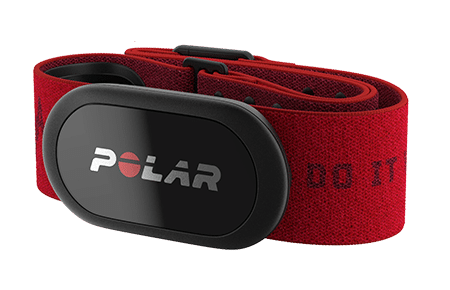
One of the most popular options is Polar H10. It’s reliable and accurately measures your heart rate. It fits any watch and easily connects to your phone or exercise machine using Bluetooth or ANT+.
Remember to wash the strap after a few runs. This will help it last longer and keep the signal strong. The main thing is to remove the sensor before washing and wash it by hand or in a laundry bag if using a machine.
Best models:
9. Breathing trainers
Breathing trainers improve endurance, cut down on breathlessness, and make challenging runs feel easier.
If you’re new to this, start with medium resistance—it’s effective but not too intense. Choose a simple model if you prefer no tech, or a smart device if you like tracking your progress.
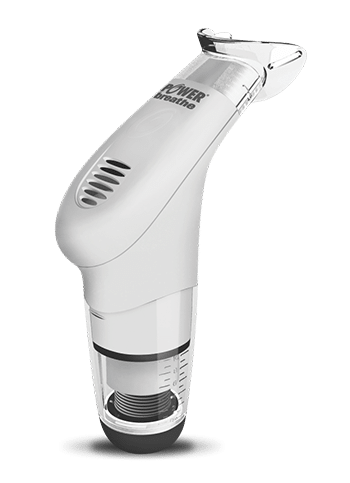
The POWERbreathe is a compact and reliable breathing trainer. It adds resistance to your inhales, helping to build strength where it matters—in your lungs.
Best choice: POWERbreathe
10. Smart scales
For runners, progress isn’t always about speed or distance. Sometimes it’s about what’s going on inside your body. Smart scales do more than measure weight. They also track body fat percentage, muscle mass, water levels, and more.
This info is helpful for training, losing weight, or recovering after long runs. Some smart scales sync with apps like Garmin, Fitbit, or Apple Health, keeping all your fitness data in one place.
As with gear, consistency matters. Step on the scale at the same time of day, and don’t stress about day-to-day changes—focus on long-term trends.
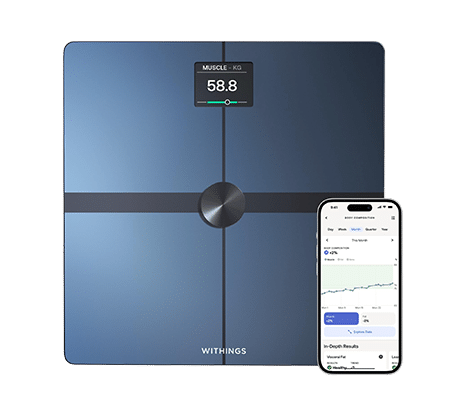
One of the most popular options is the Withings Body. It's accurate and links to many fitness platforms. It also shows a clear breakdown of your body composition over time.
Best models:
Yes, it all sounds cool—technology, sensors, recovery based on graphs. But to be honest, you don’t have to buy everything. Choose what you really need, and focus on reviews, your experience and goals. If you want to run comfortably, recover faster, or track your progress—these gadgets can help.
If you make a purchase through the links provided, we might earn a commission to help keep our website running—at no extra cost to you. Your support means a lot to us.
By Lena Sage


