

Why We May Feel Ashamed of Finishing Last
When participating in any competition, whether it's a large race or a local parkrun, we feel like we're part of a big community of runners. Even those who prefer to train alone feel a sense of belonging during a race.We feel proud and inspired by being a part of this community, but at the same time, we involuntarily compare ourselves to other runners.If we end up running slower than our usual pace or finishing among the last, we tend to think that we are inferior to everyone else. This can be frustrating, especially when we see participants twice our age running ahead of us or those who have just started training.The fear of being last can also arise from an imaginary picture of the finish line. When we're lagging behind everyone else, we imagine that no one will be waiting for us at the end of the race, the medals may have already been distributed, and the organizers may have already packed up the finish line.The same goes for group workouts: it's disheartening to show up and discover that your teammates have already finished.These fears and frustrating feelings are understandable and explainable.Instinctively, we fear failure, which can lead to thoughts such as "I don't belong here," "I'm not good enough for this," and "Everyone else can do it, but I can't."Such negative beliefs can not only ruin our mood but also affect our overall attitude toward running. If they persist from race to race, from session to session, we can quickly become disillusioned with running, lose confidence in ourselves, and eventually give up training.However, there's nothing to be ashamed of. Let's figure out why.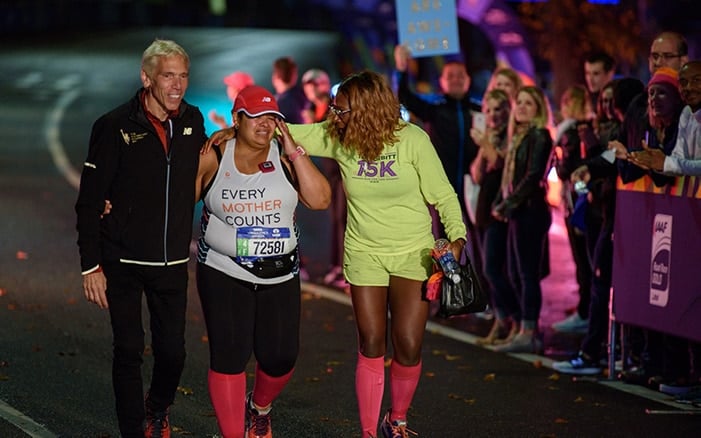
Why Running Slowly is Okay
A slow pace is subjective as it varies for each person. For instance, for Eliud Kipchoge, the world record holder, completing a marathon in 2 hours 15 minutes would be considered slow, and that's a pace of 5:09 min/mile (3:12 min/km).On the other hand, for most runners, a slow pace at the same distance would typically be around 10:30 min/mile (6:30 min/km) or even slower, which would translate to a finishing time of approximately 4.5 hours.The key is not to compare yourself with others, but only with yourself. This may seem obvious, but this concept is highly effective in running.Related: 5 Reasons Why We Run Faster on Race Day Than During TrainingThe people you may compare yourself to could have started training several years before you and already achieved impressive results. Also, they may have a goal of setting a personal record and, hence, are running at a faster pace.There are several reasons why some athletes may be faster than others, including:- Being at the peak of their fitness at the moment.
- Having a natural inclination toward long distances.
- Having physical and genetic makeup that allows them to run more efficiently and make progress rapidly.
- It’s less likely to cause injuries than fast running. By running slowly, you take care of your health.
- Slower runners help to popularize running. People who want to start running will not be motivated by athletes like Kipchoge, who has extraordinary speed. Instead, they may be motivated by observing people like you running in a park, thinking "I can do that too!"
- Only running at a slow pace helps you to realize that this activity is a source of pleasure, rather than suffering or a test of endurance.
How to Stop Feeling Ashamed of Your Slow Pace
If you have ever attended any race, you probably noticed that many people are running at a pace similar to yours. While strong athletes take off with the starting shot, lines of leisurely runners form behind them, running at a pace of 10:30 min/mile (6:30 min/km) or slower.The truth is, no one makes fun of slower runners. Moreover, participants who struggle to keep up with the pack and fight until the last meters receive strong support along the way, especially at the finish line. This is because completing a marathon in 6 hours is much more challenging than doing it in 3 hours.Related: What Happens to Your Body During and After a Marathon?Here are five tips on how to overcome the feeling of awkwardness if you find yourself running among the last ones.1. Sign up for a different distance
It could be that the distance you initially chose is not a good fit for you. Perhaps you will do better running 10K than a half marathon, or vice versa. Even elite runners can’t perform equally well in both a 100-meter sprint and a marathon, that's why they specialize either in sprint distances or long-distance events.Maybe this is your case. Once you find a distance that suits you better, you'll see improvements in your performance and your name won't be at the bottom of a list of finishers anymore.2. Find a group of like-minded people
Running last on your own can make you feel uncomfortable, but doing it in a group of slow runners will encourage you and also uplift all the participants in the group. Moreover, when running at a slow pace, you can chat, joke around, and cheer each other on.Slow running can lead to making new friends. This is less common at faster speeds, as runners are usually focused on their goals and don't have much time to socialize.3. Put on a show
Instead of shyly looking down, try to draw attention to yourself. Dress up in a funny costume, smile, and give high-fives to spectators, or even take selfies with them.This way, you not only liven up a race but also show the most timid runners that finishing last is nothing to be ashamed of. Instead, it can be an enjoyable experience.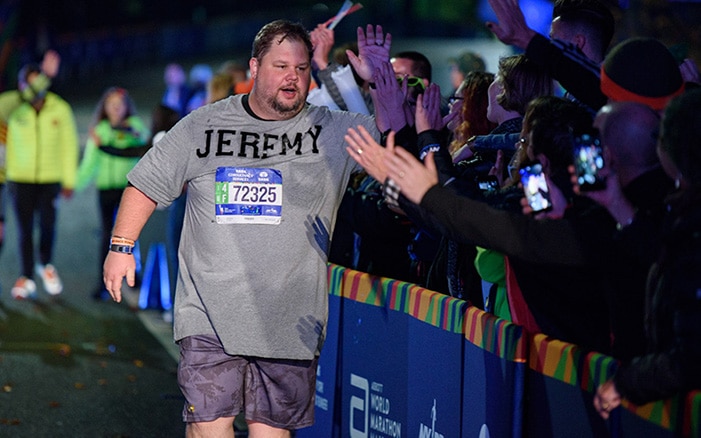
4. Become a volunteer
If there are weekly Saturday parkruns in your city, apply to be a closing volunteer. You will see that there is no reason to be afraid to arrive last, and everyone is welcomed at the finish line. The slowest participants will even thank you for ensuring they're not the last ones to cross the line.5. Change your attitude
Think about the advantages that running at a slow pace gives. You’ll be able to:- appreciate the beauty of your surroundings,
- explore a new city on the run and admire the sights,
- interact with spectators along the course,
- smile for every photographer and make funny faces to capture entertaining photos,
- enjoy the experience, meditate, and take a break from the hectic pace of life.


