

1. Rarájipari—The Tarahumara Marathon with a Ball (Mеxico)
Imagine running 150 miles (240 km) across rugged terrain—nonstop—while kicking a wooden ball the entire way.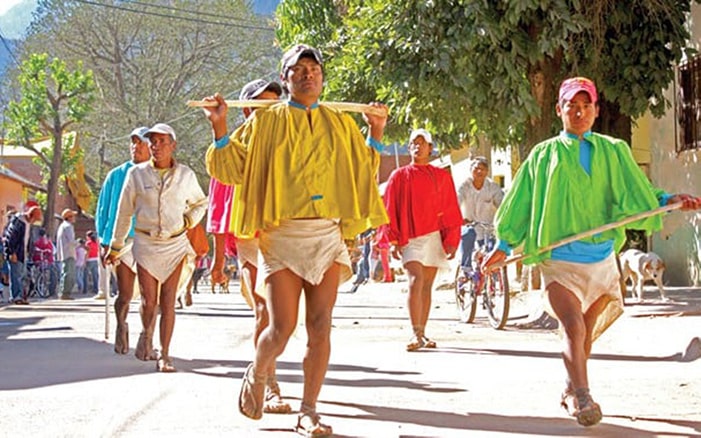
How the race works
- The race can last a full day or longer, continuing non-stop through the day and night.
- Before shamans used bone powder to cast spells and bring luck on their side for the game.
- Runners drink tesguino, a traditional corn beer, which they believe gives them strength.
- Women take part in a race called Dovérami. In this event, they toss vine loops instead of kicking a ball while running.
Can anyone join?
No—Rarájipari is only for the Tarahumara people and remains deeply sacred to their culture. However, outsiders can observe and learn about their running traditions.While this ceremonial race is exclusive to their community, the Tarahumara have competed in ultramarathons worldwide, amazing others with their legendary endurance.2. Kaihōgyō—The 1,000-day Marathon (Japan)
A 1,000-day marathon, sleepless nights, and a final trial of seven-and-a-half days without food or water—only the most disciplined monks can endure this sacred path to enlightenment.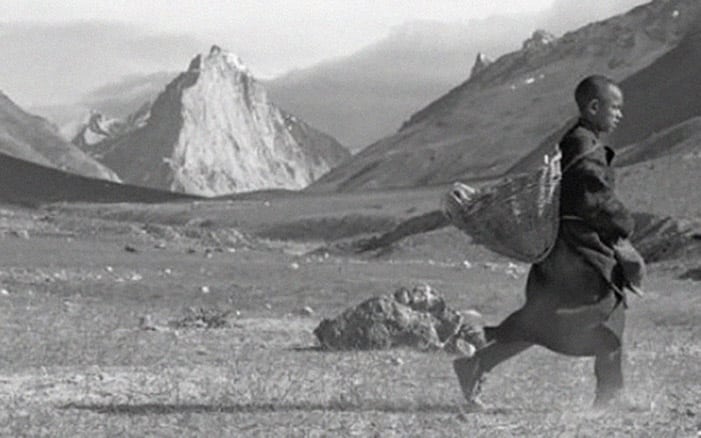
How Kaihōgyō works
- 100 days a year, monks walk 30-40 km (19-25 miles) each night. Along the way, monks stop for prayers at sacred sites.
- Over seven years, monks complete 1,000 marathons, covering nearly 40,000 km—equivalent to Earth's circumference.
- On the 700th day, they face the most extreme trial: Dōiri, a seven-and-a-half-day fast with no food, water, or sleep.
- Those who succeed become revered as “Saintly Masters” and are considered living legends.
Can anyone join?
No—Kaihōgyō is an exclusive practice reserved for Tendai Buddhist monks. However, visitors can hike parts of Mount Hiei and witness the spiritual devotion of the monks who take on this extraordinary challenge.3. Encierro—Running with the Bulls (Spain)
Running for your life through narrow streets while six massive fighting bulls charge behind you at full speed—one wrong step, and you're trampled or gored.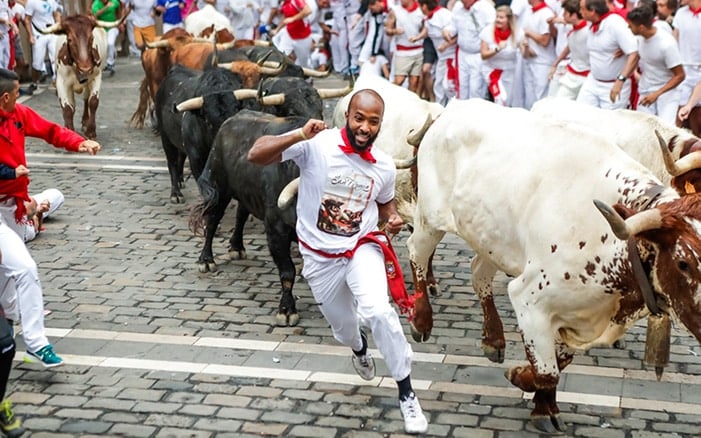
How the bull run works
- At 8:00 AM, they fire a rocket to signal the start. The authorities release six fighting bulls into the city streets.
- Runners must finish an 875-meter course. It winds through narrow cobbled streets and ends at the bullring.
- Bulls can reach speeds of 35 km/h (22 mph), making it nearly impossible for runners to outrun them.
- In the last century, 15 people have died and many more have been injured.
Can anyone join?
Yes—anyone over 18 can participate. Runners must follow strict rules, including no distractions, no alcohol, and no stopping mid-run. However, only the bravest dare to face the bulls in this high-risk, high-adrenaline tradition.4. Man vs. Horse—The Ultimate Endurance Marathon (Wales)
Can a human outrun a horse over long distances? What started as a pub debate turned into one of the most unique endurance races in the world.
How the race works
- The race begins with a tough climb, featuring deep mud, river crossings, and rugged terrain.
- Runners start 15 minutes before the horses for safety reasons.
- Horses must pass a veterinary check halfway through, giving runners an opportunity to gain an edge.
Can anyone join?
Yes—the race is open to all runners, but it requires exceptional endurance and mental toughness.5. Comrades Marathon—The Most Iconic Ultra Race (South Africa)
This is the ultimate battle against time, pain, and exhaustion—90 kilometers and a strict 12-hour time limit.
How the race works
This legendary ultramarathon covers 90 kilometers (56 miles) and alternates directions each year:- Up Run—from Durban to Pietermaritzburg, featuring brutal elevation gains.
- Down Run—the reverse route, which is just as punishing on the legs and joints as the original path.
- The last runners to finish within the time limit get the Vic Clapham bronze medal.
- At exactly 12 hours, race officials close the finish line, meaning even a one-second delay results in disqualification.


