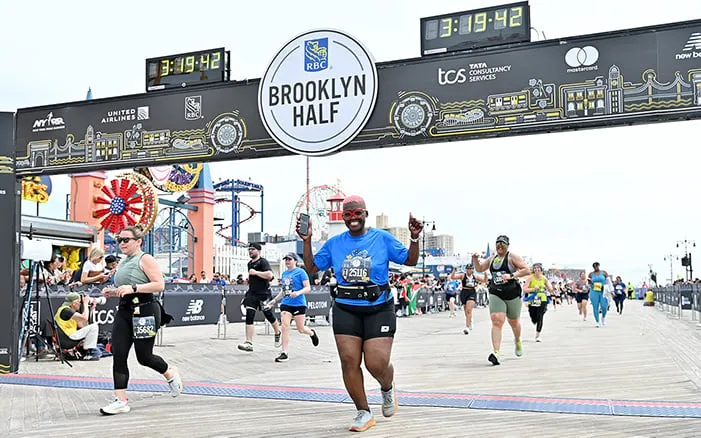
Running a half marathon is an ambitious goal, and running the whole distance without stopping is an even greater challenge. In this article, we'll provide you with 10 tips on how to train effectively and achieve your goal of running the entire 13.1-mile distance without stopping.
How to Train to Run Without Stopping
If you find yourself having to switch from running to walking during a run, it's likely because you have low endurance. This means that you haven't yet developed the physical and mental ability to maintain a steady pace and a certain level of effort over a long period.
You feel tired, and your brain dictates that you stop. Additionally, your muscles and ligaments may not be adequately prepared for prolonged exercise.
The good news is that you can improve your level of endurance by building a proper training process. If you're able to run 2 miles, 5K, or 10K without stopping, you've already achieved some success in physical preparation. And running a half marathon without switching to walking is an achievable goal.
Next, you will discover four essential components for preparing for a half marathon.
1. Regular training
The most important factor is maintaining regularity in your training process. Skipping training for three days or more can lead to a decline in your overall form.
Regular training, on the other hand, helps to increase your physical fitness. It is essential to follow a well-structured training plan that includes various types of activities, each aimed at developing different physical qualities.
2. Speed training
Performing training that targets your VO2 max (maximum oxygen consumption) and the anaerobic threshold is crucial to improve your running speed.
Your training plan should include interval and tempo runs. By incorporating these types of running sessions, you'll boost your speed endurance, allowing you to maintain a particular pace for an extended period.
3. Long runs
For runners, having good endurance is essential to keep running for as long as possible without stopping. The most effective way to enhance endurance is to engage in long runs at a low heart rate.
4. Strength training
Not all runners, including professional athletes, enjoy spending time in a gym or doing planks at home instead of running. However, incorporating strength training into a runner's routine is essential.
10 Mistakes to Avoid If You Want to Run a Half Marathon Without Stopping
The following tips will be useful for both beginners and experienced runners. These tips are based on typical mistakes runners make.
1. Don't plan a half marathon as your first race of a running season
Popular races come with many unfamiliar and exciting factors that can significantly impact your result. Moreover, a half marathon is a demanding distance that requires high endurance and energy distribution skills.
Running a 13.1-mile race as your first race of a season is not the best decision. Instead, gradually build up to longer distances by starting with 2 miles, 5K, and 10K races.
This approach will help you adapt to a faster pace than during training, learn or remember how to refuel during a race, experience the "crowd effect," and test your equipment.
2. Don't skip long runs
They are a crucial part of preparing for long races, as they build both physical endurance and psychological readiness for the challenge.
Related: Should You Run the Full Distance Before a Half Marathon?
3. Resist the urge to give it your all at the beginning of a race
The adrenaline rush and fast runners around you may indeed be inspiring, but when you start to feel fatigued in the second half of a race, you'll be on your own. You'll have to rely on your own strength to carry you to the finish line.
Start at a comfortable pace and keep in mind that a half marathon isn't a sprint or even a 10K race. The pace and endurance required for these distances are different.
4. Don't set unrealistic goals
Finishing a half marathon or marathon is already a significant accomplishment. Don't pressure yourself to achieve a fast time in your first big race. Your goal for such an event should be to finish, and ideally, with a smile on your face.
To achieve this, you need to set a realistic goal of running at a comfortable pace throughout the course.
5. Take rest days seriously
Rest days are crucial for both physical and mental recovery and to minimize the risk of injury and overtraining.
If you have a scheduled rest day but feel energized and want to run for pleasure, avoid the temptation and take a break.
Remember, recovery is just as essential a component of your training routine as running itself. You improve when you rest, not when you push yourself to exhaustion.
6. Don't exhaust yourself with training two weeks before a half marathon
During this period you should reduce your mileage by 25-50% to allow your body and mind to rest, recover, and prepare for the race.
Some athletes worry that they'll lose their physical fitness during this time, but that's not true. With a properly designed training plan, you’ll reach your peak form by the day of the competition.
7. Don't neglect the quality of your diet
Consuming too much fried, fatty, high-salt, and high-sugar unhealthy foods, can lower your energy levels.
It's better to stick to a balanced diet, as it will make your training easier and help you approach a race with an optimal competitive weight.
8. Don't forget about nutrition and hydration during a race
When you participate in a 5K race, you don't have to worry about nutrition during the run. However, a half marathon will be less forgiving, especially in warm or hot weather when running under direct sunlight.
It's important to drink before you feel thirsty and consume energy gels or proven foods, such as bananas, at aid stations every 30 minutes, instead of waiting until your energy is depleted.
9. Don't try anything new the day before or during a race
This includes your nutrition, hydration, and equipment. You never know how new products will affect you during a competition or if new equipment will cause irritation and blisters.
Stick with what you know works for you to avoid any surprises on race day. In fact, this is another reason why it's important not to skip long runs (see point 2), as they can help you test your nutrition and equipment.
10. Don't let bad weather stop your training
When the weather is bad, you have several options to choose from. You can:
- opt for indoor training in a gym, arena, or on a treadmill instead of running outside;
- do general strength exercises at home;
- skip the session altogether due to the bad weather;
- still go running outside.
Your decision will depend on a combination of external factors, such as whether you have access to a gym, how far it is, and what the weather is like, as well as your internal motivation.
However, if there's a blizzard or heavy rainstorm outside, running in these conditions could either be an act of bravery or desperation. It's definitely not worth risking your health and safety just for training. Ultimately, the decision is up to you.
But if the weather isn't catastrophic, you can still train.
- With the right equipment, your training will be much more comfortable.
- You'll be able to adapt to unfavorable conditions that you may encounter on race day, whether it's rain, snow, or heat.
- Training in bad weather can make you stronger since you can only toughen up by leaving your comfort zone.
Can You Walk Part of a Half Marathon?
When people set a goal to finish a half marathon, they usually want to run the entire distance without taking any walking breaks. But is it required to only run?
According to race regulations, it is acceptable to walk during a half marathon. The only requirement is to stay within the time limit, which is usually 3 hours from the starting moment or even more. If you alternate between running and walking, you’ll likely reach the finish line before it closes.
Switching between running and walking during a half marathon can have physiological benefits for your body. Taking walking breaks reduces the intensity of the effort, which allows your body to eliminate the by-products of more intense running.
Additionally, walking reduces the strain on your spine, hips, knees, and ankles. Therefore, if your health condition doesn't allow you to withstand prolonged stress on your musculoskeletal system, walking intervals can be the key to completing a half marathon.
At the same time, taking frequent breaks during a long run makes running more difficult. You’ll need more willpower, and your body, which has received micro-traumas from prolonged running, will find it harder to get back into the running rhythm.
We suggest taking more time preparing for a race so you can run it fully. If you are not ready to compete or achieve your desired debut time, you can finish a half marathon at an easy conversational pace without getting too tired too soon.
However, if you realize that walking breaks are inevitable, follow these recommendations to finish a half marathon strong:
- Plan your walking breaks and take them before you are completely unable to run.
- On a hilly course, use inclines to walk uphill and run downhill.
- At aid stations, take advantage of the opportunity to walk since you'll likely be slowing down anyway to take in nutrition and hydration.
10 Tips for Beginners on How to Run Longer Without Stopping
Here are some essential tips to help beginner runners prepare for long-distance races such as half marathons or marathons.
1. Run more frequently
Your body adjusts to the physical stress much faster if you run more than two to three times a week.
However, beginners shouldn't run every day because it increases the risk of injuries, including periostitis and stress fractures. A possible approach is to run every other day.
Related: Running Twice a Day: Should You Run Doubles?
2. Be patient and consistent
Continuing the first tip, it's important to note that you shouldn’t strain yourself with frequent runs at the beginning of your running journey. Start small with two to three runs per week and gradually increase the frequency.
Once you adapt, which can take about a month, increase the number of running days to four. After another one or two months, add a fifth running day.
Remember to give yourself at least one rest day a week to prevent injuries and allow your body to recover.
Consistency is key, so don't train diligently for several weeks and then abandon training for a long time. Without a constant stimulus, your heart, lungs, and muscles will not be able to adapt, and every run after a long break will seem like the first.
Make sure to stick to your training schedule and avoid missing runs.
3. Gradually increase the length of your runs
Just as you gradually and consistently increase the number of sessions, also increase their duration from week to week.
For example, if you’re currently able to run for 30 minutes without stopping, extend this time to 33 minutes the following week, then to 35 minutes, and so on.
It's important to note that you can't infinitely increase the length of your runs, and there's no point in doing so. That's why it's crucial to incorporate different types of speed and slow training sessions into your routine.
4. Engage in prolonged aerobic activities
At the beginning of your running journey, you may not be able to run for extended periods, like 1.5 hours. That distance could feel like a marathon to you, and it's not a good idea to attempt it right away as it could be harmful to your body. It's important to gradually increase the intensity of your training over time.
But what you can already do is include prolonged aerobic activities into your routine. One option is a run-walk-run method when running is alternated with walking. Breaks for walking give your legs and the cardiovascular system a chance to recover, thus allowing you to be active for longer.
Other options for prolonged aerobic activity are hiking and cycling.
5. Vary your training routine
Avoid running the same distance at the same pace every time. Not only is this boring, but it also hinders your progress.
Diversify your preparation for your first half marathon by including interval, tempo, and hill runs, strength training, and special running exercises in your program.
6. Monitor your heart rate
Running is all about enjoying the activity, maintaining good health, and getting the necessary physical activity. Running is not supposed to be a painful experience, although it may be challenging at the start of the distance or toward the finish line.
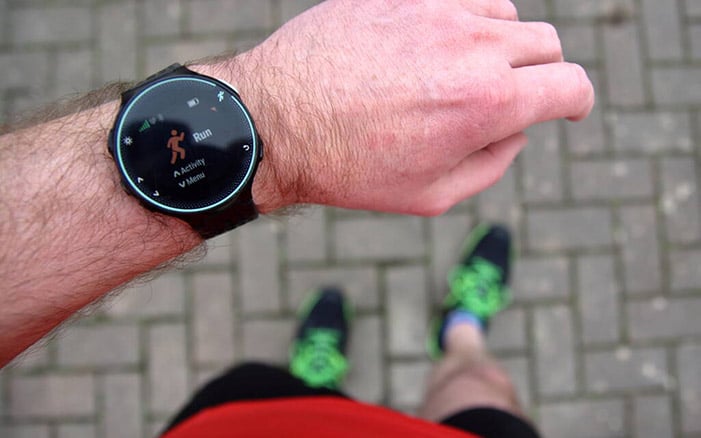
If you find it difficult to monitor your heart rate by feeling it, make sure to use a heart rate monitor. It will help you run at an easy pace when your plan requires it (which is most of your preparation).
The aerobic zone is considered to be 70-80% of your maximum heart rate. There are different formulas for calculating maximum heart rate, but the most accurate method is to determine it through special tests.
7. Find your optimal long-run pace
The main reason why runners, whether beginner or experienced, struggle to run without stopping is that they tend to run too fast. Even elite runners can't sustain the pace of a 3000 or 5000-meter race for a full marathon.
Slowing down your pace intentionally during long runs is the best way to run longer without stopping.
Related: At What Pace Should You Run Easy and Long Runs
8. Remember to use your arms
The importance of arm movement during running is often overlooked, but using your arms correctly can enhance your running efficiency, propel your body forward, and alleviate some of the strain on your legs. All of these factors contribute to your ability to run for longer.
9. Choose running gear that fits you
Wearing footwear and apparel not specifically designed for running may not only hinder your ability to run for long periods but also increase the risk of injury.
Visit a sports store to find gear that fits you well, feels comfortable, and meets your specific needs. One of the greatest advantages of specialized sports stores is their team of shop assistants who can help you choose the proper running shoes and clothing.
10. Find ways to overcome boredom
Sometimes people struggle to run for extended periods not because of their physical fitness level, but because they become bored with the process.
To combat this, consider running with a partner, selecting interesting routes, or listening to music or podcasts. Finding an entertaining podcast or story that you only listen to while running can be an excellent motivation to keep you running to find out how the story ends.
Conclusion
We hope that our article will help you on your journey toward finishing your first half marathon. Some runners avoid this distance, believing that their results will be worse compared to those of faster runners.
But don't diminish your accomplishments. Be proud that you have chosen this challenging distance and pushed yourself to run every time.
One day, you'll cross the finish line of your first half marathon and wear your finisher medal with pride. From that moment on, you will become a part of a big community of long-distance runners.