

Running has changed. Start lines are older, training paths are longer, and many runners now reach their best form well after the age once considered “prime.”
So how much does age really matter? When do speed and endurance peak—and how long do they last? Can you still get faster after 40, start from scratch in your 50s, or run safely well into older age?
This article explains how age influences running—and how to train and race with those changes in mind.
What is the average age of runners in races?
Distance running is getting older—and that’s not a bad thing.
RunRepeat’s large race database (28,732 races, 34.6M+ results) shows that the average age of distance race participants has climbed over time, shifting roughly from the high 30s toward the low 40s over two decades.
In other words, today’s start lines are filled with more experienced runners than ever before.
This shift reflects a broader trend. Many people now discover running later in life—often for health, longevity, stress relief, or lifestyle change—and stay with it for years.
As a result, the “typical” runner is no longer a 20-something chasing speed, but a mature athlete balancing training with work and family.
How does age affect running speed and endurance?
Age clearly influences both speed and endurance, but these qualities peak at different points in life. Speed reaches its maximum earlier, while endurance tends to hold steady longer. Over time, both decline, but they do so on different timelines.
Speed is the more age-sensitive quality. It depends heavily on maximum anaerobic power, which peaks relatively early.
In men, this capacity usually peaks around age 20 and remains fairly high until the late 20s, before declining by roughly 12–18 percent per decade.
In women, anaerobic power peaks earlier, around age 18, and declines faster, dropping by about 25–30 percent by age 30. As a result, the best pure speed performances are typically achieved in the early to mid-20s.
Endurance follows a slower curve. If we’re talking about professional sport, there is a practical age window for peak endurance performance, and even the most successful marathoners follow it.
Eliud Kipchoge retired at age 40, with his best marathon results coming between ages 30 and 38.
This pattern is rooted in physiology. Different systems that support endurance develop—and decline—on different schedules.
In men, the ability to tolerate fatigue (often described as resistance to lactate buildup) improves until about age 30 and remains relatively high until around 40, before declining by roughly 10–12 percent per decade.
In women, this capacity also peaks before age 30 and then declines somewhat faster, by about 11–15 percent per decade.
Maximum oxygen uptake (VO₂ max), another key determinant of endurance, shows a similar trend.
In women, it typically peaks around age 20; in men, closer to age 25. From there, it declines steadily with age.
As these factors begin to drop after about age 30–35, endurance performance gradually follows—a shift that explains why many professional runners step away from elite competition after 35–40.
Outside of professional sport, however, the picture looks very different. When the goal is health or personal progress, age is far less limiting. Training history and consistency matter more than chronological age alone.
Is it possible to run fast after 40?
At the professional level, the fastest marathon performances are usually achieved before age 35. Elite sport favors early specialization and high training loads, which become harder to sustain with age.
Among amateurs, the pattern often looks different. Many runners reach their strongest results between 35 and 40, not earlier.
The reason is largely practical. A growing number of runners take up the sport later in life—often after 30—motivated by health, weight loss, or social connection.
Developing marathon fitness takes time. Endurance builds gradually, through years of consistent training and accumulated mileage.
For runners who start in their 30s, it’s common to reach peak form closer to 40 and continue improving for several seasons afterward.
There are well-documented examples showing that fast marathon running doesn’t end at 40.
Ed Whitlock set multiple age-group world records and ran sub-3-hour marathons well into his 70s.
Joan Benoit Samuelson, the 1984 Olympic marathon champion, continued running competitive marathons into her 50s, including a 2:47 at the Chicago Marathon at age 52, showing that high-level performance can extend far beyond traditional peak years.
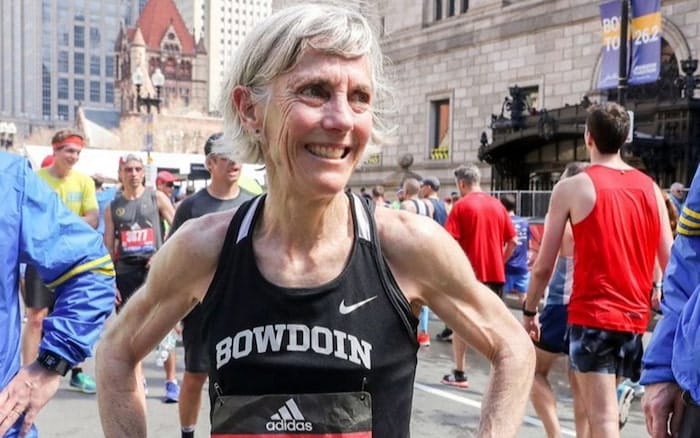
These cases show that with an appropriate training, sufficient recovery, and no medical contraindications, running performance can remain strong—and in many cases continue to improve—well beyond 40.
Why age matters less in ultramarathons
In standard marathon racing, experience already provides a clear advantage—race results consistently show that seasoned runners tend to perform better. In ultramarathons, experience matters even more. That’s why start lists at ultra events skew older, with many participants in their 40s and beyond.
Ultramarathons place extreme demands on both the body and the mind. Finishing well is all about sustained effort over long hours.
From a training standpoint, ultra success is built on volume. High weekly mileage can’t be rushed; it has to be accumulated gradually over years so the body has time to adapt.
Trying to shortcut that process almost always leads to injury or burnout. For younger runners, simply reaching the volume required for ultra racing is often a limiting factor.
Mental skills play an equally large role. Ultramarathons reward patience and pacing discipline. Knowing when to slow down, when to eat, when to adjust effort, and when to ignore discomfort often matters more than fitness alone.
These qualities tend to develop with time and experience. As a result, maturity becomes an asset rather than a drawback.
In ultramarathons, older runners often perform better not despite their age, but because of the years spent learning how to manage fatigue and decision-making over long distances.
What's the best age to start running?
There isn’t one single “best” age.
The best age to start running depends on why you’re starting.
- For elite performance, earlier is better. Most professional runners begin structured training in childhood or early adolescence, which allows time to develop coordination, tissue strength, movement efficiency, and aerobic capacity over many years. That foundation is difficult to replicate later.
- For strong amateur performance, starting in your teens or 20s offers advantages, but it’s not decisive. Many competitive age-group runners didn’t run seriously until their late 20s or 30s and still reach a high level.
- For health, fitness, or weight management, age is largely irrelevant. Adults can begin running at almost any point in life and see meaningful improvements, provided training is gradual and recovery is sufficient.
In practice, the “best” age to start running is the age at which you can train consistently, stay healthy, and enjoy the process. That matters far more than the year you were born.
Is it really possible to start running after 40—or even in your 50s—without prior running experience?
As noted earlier, the average age of participants in mass running events today is close to 40. Many runners at this age are beginners, often with no formal sports background.
For runners who are not chasing elite results, starting after 40 is not only realistic—it’s common. In fact, many people experience steady progress well into their 40s and beyond. Runners who begin later may still be adapting to endurance training, which allows room for improvement.
There’s also evidence that aerobic adaptations remain strong later in life.
Research suggests that mitochondrial function—the engine behind endurance—continues to respond well to aerobic training in middle age. That helps explain why runners who start after 40 can still build fitness efficiently, especially when training is consistent and well paced.
The key is approach. Progress after 40 tends to reward patience rather than intensity.
Structured training, gradual mileage increases, and adequate recovery matter far more than pushing hard early. For most runners, that’s enough to build a sustainable running habit—and meaningful performance—without prior experience.
Related: How to Start Running After 40: Your Step-by-Step Guide
The same is true for many runners in their 50s, especially those without major health issues—progress may come more gradually, but adaptation to endurance training remains strong.
Is it possible to start running after 60 without harming your health?
Regular physical activity becomes even more important with age. Exercise supports hormonal balance, slows muscle loss, helps maintain bone density, and benefits cognitive and mental health. Running can be part of that picture—but starting after 60 requires more attention to how the body responds to stress.
Two age-related changes deserve particular attention.
Cardiovascular considerations
High blood pressure, atherosclerosis, and elevated cholesterol become more common with age, influenced by both biology and lifestyle. In women, cardiovascular risk often increases after menopause due to hormonal shifts.
Running can improve cardiovascular health, but abrupt training or excessive intensity increases risk. For runners starting after 60, a medical checkup before training is essential—even for those who feel generally healthy.
Musculoskeletal considerations
Without regular loading, muscle mass and bone density decline with age. Reduced muscle strength can lead to weight gain and increased joint stress.
While running can help slow these changes, too much load too soon raises the risk of overuse injuries.
For runners starting at 60+, a conservative progression matters more than ambition.
Practical guidelines for starting after 60
- Get medical clearance before beginning
- Start with walking, then progress to walk–run intervals
- Increase volume gradually, not weekly by default
- Stop immediately if symptoms such as chest pain, dizziness, unusual shortness of breath, or rapid heartbeat occur
- Prioritize adequate protein intake to support recovery
- Keep training frequency modest at first—two to three sessions per week is sufficient
With the right approach, running after 60 can be safe and deeply beneficial. The goal is not speed or distance, but consistency, resilience, longevity, and long-term health.
Is it ever too late to start running?
Some doctors recommend shifting toward low-impact exercise after 60, especially for people with chronic conditions. Still, age alone does not set a hard limit on running. There are runners who have continued to train—and even complete marathons—well into advanced age.
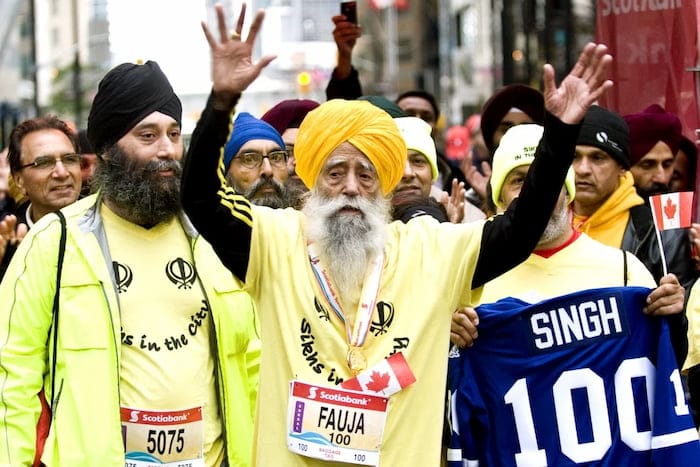
One of the most widely known examples is Fauja Singh, often called the “turbaned runner.” He took up running in his late 80s and completed multiple marathons after age 90, becoming a symbol of longevity in endurance sport.
In the United States, Harriette Thompson finished the San Diego Rock ’n’ Roll Marathon at age 92, setting age-group records and showing that long-distance running can remain part of life even in the tenth decade.
Another notable example is Gladys Burrill, who completed a marathon at age 92 and was widely recognized as one of the oldest female marathon finishers in history.
There are many such cases. They don’t suggest that everyone should aim to run marathons late in life, but they do make one point clear: there is no fixed age at which running becomes “too late.”
With appropriate medical guidance and realistic expectations, age itself is not a reason to stop—or never start—running.
What injuries are more common in older runners?
Injuries are part of running at any age. That said, research suggests that runners over 35 are injured slightly more often than younger runners—about 30 percent versus 24 percent.
The pattern of injuries also changes with age. Younger runners more often deal with knee pain, hamstring strains, and iliotibial band issues. Older runners are more likely to experience Achilles tendinopathy and foot-related problems.
One likely reason is how connective tissue changes over time. As tendons age, they tend to lose stiffness and tolerate stretch differently. That can make them more vulnerable to overload, especially when training volume or intensity increases too quickly.
How to reduce the risk of injuries in older runners?
Lower injury risk doesn’t require a complete training overhaul. Small, targeted adjustments usually make the biggest difference.
1. Adjust workload and prioritize recovery
With age, recovery takes longer. Protein utilization and collagen synthesis decline, which means the body needs more time to repair itself.
Running slightly less is often better than trying to maintain the same volume year after year. If you’re running five or six days a week, consider replacing one run with a low-impact session such as cycling or swimming.
2. Maintain general strength and muscle mass
Strength training plays a key role in injury prevention. It helps preserve muscle mass, supports bone density—especially important for women—and improves tendon stiffness.
Studies suggest that low-rep, heavier strength training two to three times per week is more effective for these goals than light, high-rep workouts.
3. Be selective with speed and plyometric work
Explosive drills, sprinting, and jumping exercises can support performance and bone health, but they also place high stress on joints and tendons. Use these sessions carefully and pay close attention to early warning signs.
Ignoring pain signals is one of the fastest paths to injury.
4. Be cautious with very soft or unstable surfaces
Despite popular belief, running on sand or other unstable surfaces increases strain on ligaments and tendons. For most runners, especially older ones, stable surfaces are safer for regular training.
5. Limit racing frequency
Racing is a form of stress. Packing the calendar with too many events leaves little room for recovery.
A better approach is to plan the season in advance, choose a small number of goal races, and build fitness gradually. Consistency over time matters more than how often you pin on a bib.
How does running affect health and longevity?
Regular running has a well-documented impact on long-term health. It supports muscle strength and bone density, improves cardiovascular function, and helps regulate metabolism and hormonal balance. Over time, these adaptations lower the risk of heart disease, type 2 diabetes, and several forms of cancer.
Running also benefits the brain. Consistent aerobic exercise is linked to better cognitive function, improved sleep quality, lower levels of chronic stress, better mood, and emotional stability.
These benefits add up. Large population studies show that runners live longer than non-runners, with an average life expectancy advantage of about three years.
Importantly, the effect does not require high mileage or fast paces. Even short, regular runs—performed consistently over time—are associated with meaningful health gains.
From a longevity perspective, running maintains systems that allow the body to stay functional, resilient, and independent for longer.
Related: Do Runners Really Live Longer?
Conclusion
Many people now take up running later in life, often with health, fitness, weight loss, or long-term well-being as their primary goal. As a result, the average age of race participants has risen to around 40, and in ultramarathons it is even higher.
While peak physical capacity occurs earlier in life, age does not put an immediate ceiling on performance. Many runners continue to improve into their 40s, and endurance adaptations remain strong well beyond that point. Progress may look different than it does at 25, but it is still very much possible.
At the same time, aging brings predictable physiological changes. Speed and endurance decline gradually, recovery takes longer, and tolerance for high training loads narrows. Ignoring these shifts increases the risk of injury and burnout.
Age itself does not determine whether someone can run. Health status, training approach, and consistency matter far more. For those who train thoughtfully, running can remain a reliable way to stay active and healthy for decades.


